HDPE Geomembrane Applications in Reservoirs and Landfills
HDPE geomembrane is widely specified for reservoirs, landfills, wastewater ponds, and other containment projects where reliable seepage control and long-term durability are essential. For contractors, distributors, and project owners sourcing liner materials, product thickness, surface type, chemical resistance, welding performance, roll dimensions, and project conditions should all be evaluated before confirming an order.
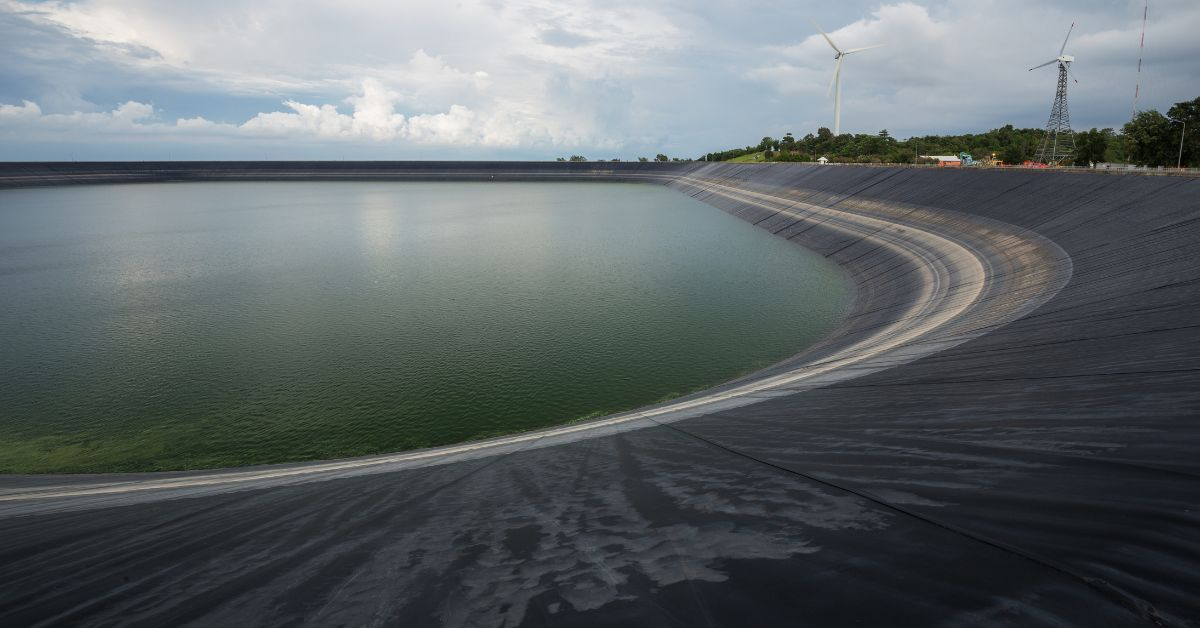
HDPE Geomembrane for Reservoir Lining Projects
Reservoirs require a stable lining system that can reduce water loss while adapting to large construction areas and changing site conditions. Polyethylene liners are commonly installed in agricultural reservoirs, industrial water ponds, irrigation facilities, and emergency water-storage projects.
Before installation, the subgrade should be compacted and cleared of sharp stones, roots, and other objects that may damage the liner. Where the foundation is rough or contains angular particles, a protective geotextile layer may be installed beneath the membrane.
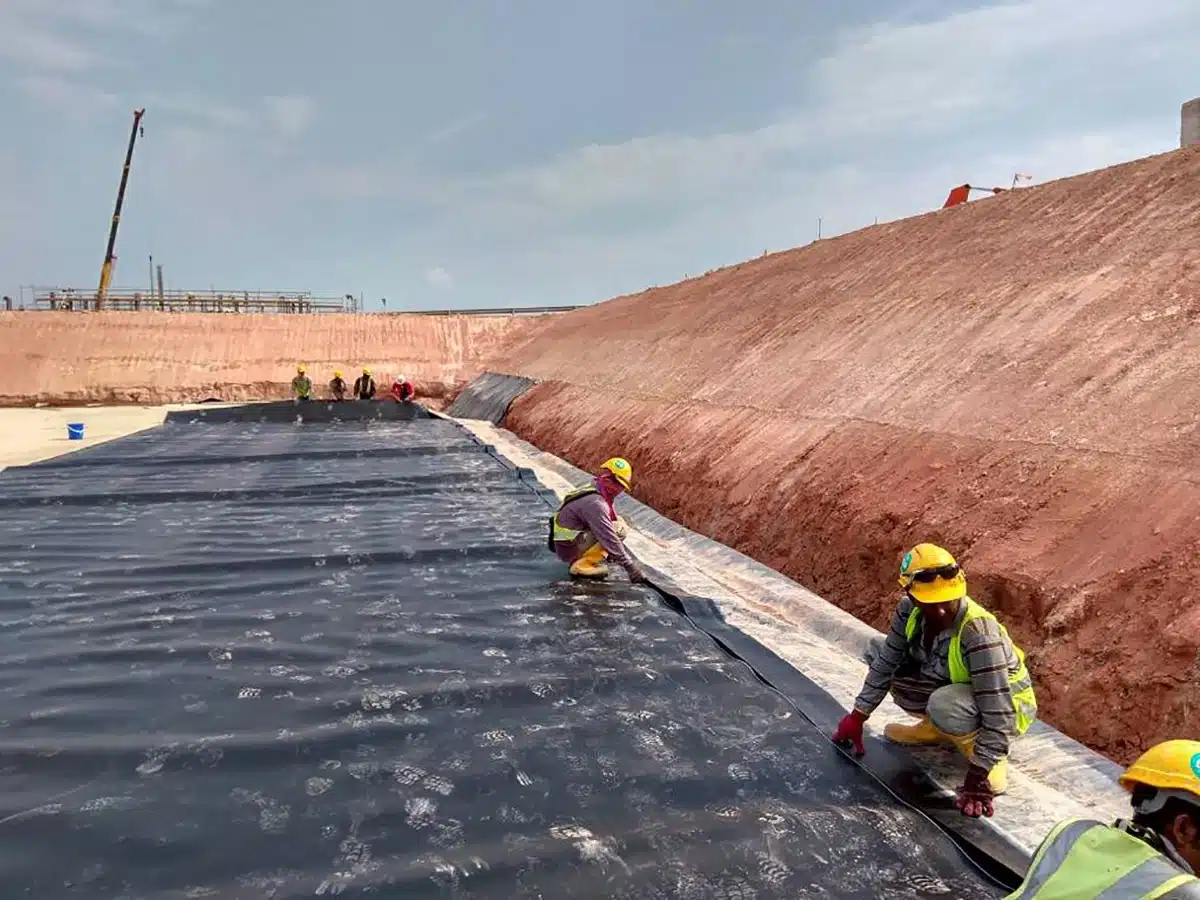
In one typical reservoir project, a large earth basin was prepared and compacted before the liner panels were deployed across the floor and side slopes. Adjacent sheets were joined through thermal welding, followed by seam inspection and testing. Anchor trenches around the perimeter helped secure the liner and reduce movement caused by wind or changes in water level.
For buyers comparing HDPE geomembrane lining systems for reservoirs, thickness should not be selected only according to price. Water depth, slope geometry, subgrade condition, installation temperature, expected service life, and local design requirements can all influence the final specification.
HDPE Geomembrane for Landfill Containment Systems
Modern landfill engineering usually requires several coordinated geosynthetic components. A typical system may combine a primary synthetic barrier with compacted clay, geosynthetic clay liners, geotextiles, geonets, and drainage geocomposites.
The membrane serves as the primary synthetic barrier, helping restrict leachate migration into the surrounding soil and groundwater. Above or below the liner, other geosynthetic products may provide cushioning, drainage, filtration, separation, or additional leakage protection.
In a municipal solid-waste landfill project, the foundation is first graded and prepared according to the engineering design. The liner is then deployed in panels and welded together on site. Drainage components installed above the barrier collect and transport leachate toward designated treatment or collection facilities.
Selecting HDPE geomembrane solutions for landfill projects also requires attention to chemical compatibility and installation quality. Landfill leachate may contain complex chemical compounds, while settlement and waste loading can create mechanical stresses over the operating life of the facility.
Key Specification Factors for Project Procurement
A suitable liner specification depends on the actual engineering environment. Buyers should provide project information before requesting a final quotation so that the supplier can recommend an appropriate material configuration.
Important purchasing factors include:
- Required membrane thickness
- Smooth or textured surface
- Roll width and roll length
- Project area and required quantity
- Subgrade characteristics
- Chemical exposure
- UV exposure before covering
- Slope angle and interface requirements
- Welding and installation conditions
- Applicable project standards
For example, smooth liners are often selected for relatively flat containment areas, while textured surfaces may be considered on slopes where higher interface friction is required.
When sourcing HDPE geomembrane specifications for engineering projects, contractors should also confirm material test data, manufacturing tolerances, packaging methods, loading quantities, and technical documentation before shipment.
Installation Quality Has a Direct Impact on Performance
Even a correctly specified liner can fail to perform as intended when installation quality is poor. Surface preparation, deployment direction, weather conditions, welding parameters, seam testing, and protection after installation all affect system reliability.
Installers should avoid dragging panels across sharp surfaces and should minimize unnecessary wrinkles during deployment. Field seams should be welded by trained personnel using suitable equipment, and completed seams should be inspected according to the project quality-control plan.
Protective soil, geotextile, drainage aggregate, or other covering materials should also be placed carefully to prevent puncture damage after installation.
From Product Selection to Complete Containment Design
HDPE geomembrane should be considered as one component of a complete containment system rather than as an isolated product. Reservoir projects focus primarily on water retention, while landfill projects require additional consideration of leachate drainage, chemical exposure, environmental protection, and long-term waste loading.
For project procurement, providing drawings, application details, required standards, thickness, quantities, and installation conditions can help manufacturers prepare more accurate technical recommendations and quotations.
Choosing the right material configuration at the purchasing stage can reduce installation risks, improve containment performance, and make project execution more efficient.


Comments
Post a Comment