Geotextile Bags in Coastal and River Engineering Applications
Geotextile bags are increasingly chosen by contractors and project owners seeking reliable erosion control and hydraulic protection solutions. For procurement teams evaluating long-term infrastructure performance, geosynthetic systems provide flexible installation, lower transportation costs, and strong adaptation to challenging coastal and river environments.
Modern hydraulic projects face continuous pressure from wave impact, river scouring, and climate-related instability. Traditional concrete structures can be expensive and rigid, while geosynthetic systems deliver adaptable alternatives with proven engineering performance.
Procurement engineers looking for advanced geotextile bags solutions for erosion control often prioritize durability, installation efficiency, and lifecycle cost reduction when selecting materials.
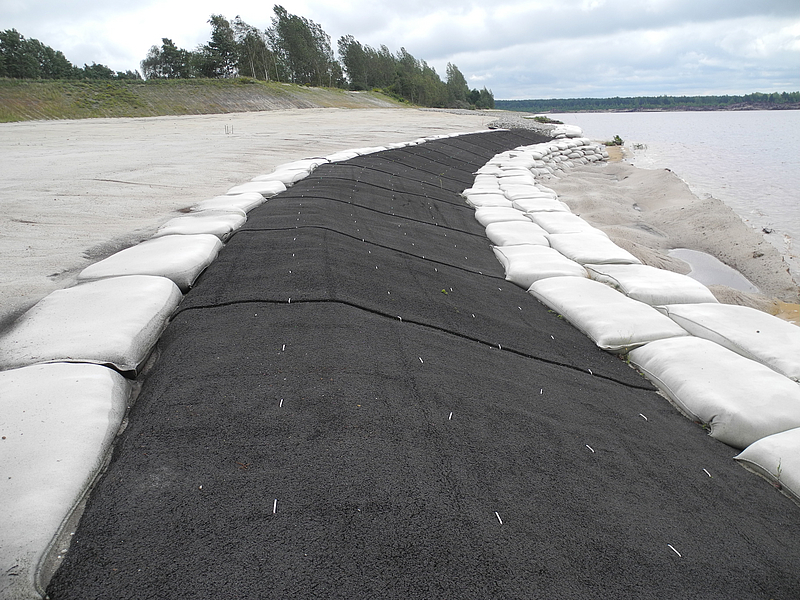
Why Geotextile Bags Are Widely Used in Coastal Protection
Coastal engineering projects require systems that can contain fill materials and create stable protective barriers. Unlike hard armor structures, flexible systems adjust more easily to seabed movement and changing site conditions. They can also absorb hydraulic energy more effectively.
Major engineering advantages include:
- Reduced transportation requirements
- Faster construction schedules
- Lower environmental impact
- Improved adaptability to uneven foundations
- Resistance to scour and wave action
Another major advantage is the use of locally available fill materials. This approach lowers logistics expenses and improves construction efficiency, especially for large-scale coastal projects.
Coastal Protection Case: Netherlands Shoreline Reinforcement
The Netherlands has extensive experience managing coastal risks caused by storm surges and sea-level challenges. Engineers implemented sand-filled geosynthetic containment systems along vulnerable shoreline sections to reinforce dunes and reduce erosion.
Rather than relying solely on rock structures, large units were positioned along erosion-prone areas. The system reduced wave energy while preserving natural coastal characteristics.
Results included:
- Reduced shoreline retreat
- Faster installation than concrete barriers
- Lower transportation expenses
- Better integration with coastal ecosystems
Many developers researching coastal geotextile bags applications for marine infrastructure recognize these projects as successful examples of sustainable engineering.
River Regulation and Hydraulic Stabilization Applications
River systems frequently experience bank erosion and foundation instability during seasonal flooding. Engineers need solutions that can stabilize vulnerable embankments while adapting to different hydraulic conditions.
These systems can be layered and configured according to hydraulic requirements, making them suitable for varying flow conditions and terrain geometries.
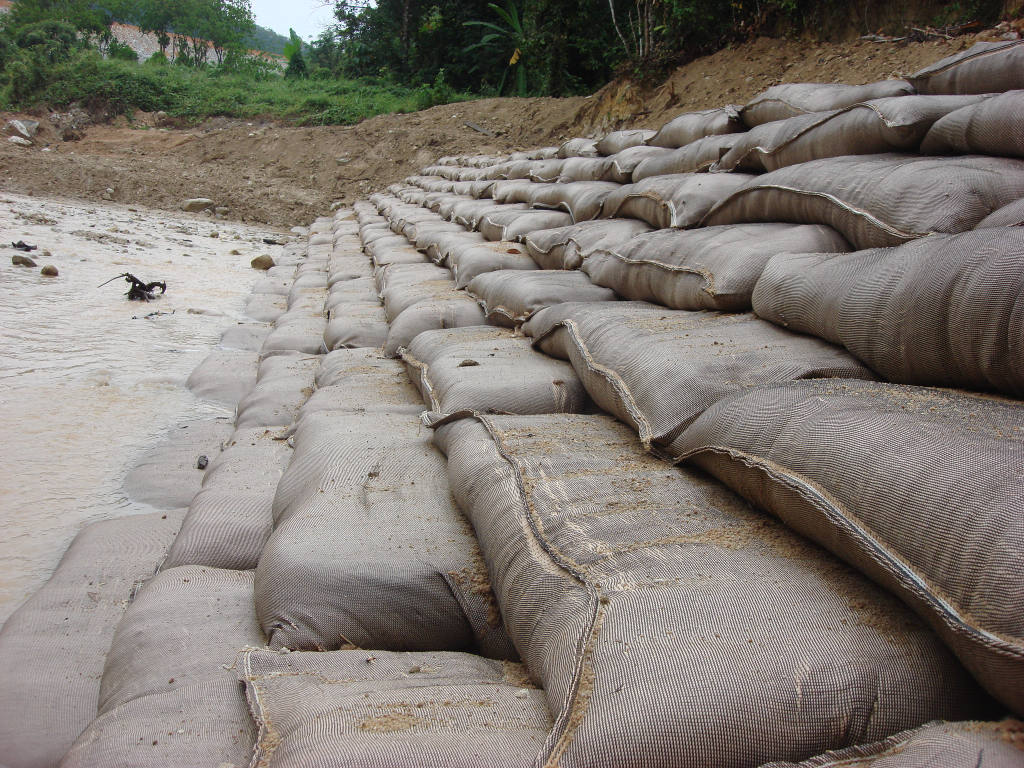
River Management Case: Yangtze River Reinforcement Project
Several sections of the Yangtze River in China have experienced recurring erosion due to strong seasonal flow variations. Engineers reinforced riverbanks using locally sourced sand-filled containment structures to reduce scouring.
The layered installation created stable protective structures capable of adapting to foundation movement.
Performance results included:
- Reduced bank erosion during flood seasons
- Increased embankment stability
- Lower maintenance frequency
- Improved settlement resistance
For contractors seeking river engineering geotextile bags systems for scour prevention, projects like this demonstrate the long-term value of flexible geosynthetic infrastructure.
Future Demand for Geotextile Solutions
As infrastructure investment increasingly focuses on sustainability and resilience, demand for geosynthetic technologies continues to grow worldwide.
Current development trends include:
- High UV-resistant materials
- Enhanced seam technologies
- Smart monitoring systems
- Eco-friendly hydraulic design integration
Future projects will continue combining flexible engineering solutions with environmental objectives. In both coastal and river applications, geosynthetic technologies are becoming an essential component of modern infrastructure strategies.
Real-world engineering applications demonstrate how geotextile bags deliver reliable performance in coastal defense and river management environments. Their adaptability, construction efficiency, and long-term stability make them a practical choice for contractors and procurement teams seeking durable geosynthetic solutions.


Comments
Post a Comment