Flexible Membrane Liner Applications for Containment Systems
Flexible membrane liner systems are increasingly specified for wastewater, mining, landfill, and water containment projects requiring dependable seepage control. For contractors, distributors, and project owners sourcing geomembranes, selecting the right liner requires evaluating material performance, chemical resistance, installation conditions, project specifications, and long-term durability rather than comparing price alone.
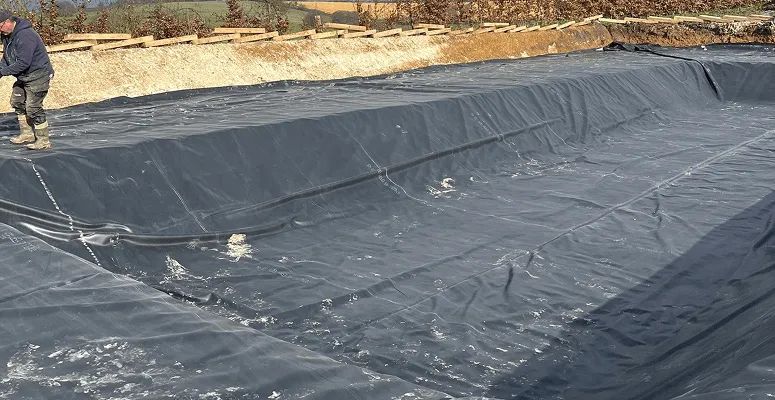
Why Flexible Membrane Liner Demand Is Growing
Environmental protection requirements and expanding industrial infrastructure are increasing demand for engineered containment systems. Wastewater treatment facilities, mining operations, reservoirs, evaporation ponds, and landfills all require reliable barriers to limit liquid migration into surrounding soil and groundwater.
HDPE geomembranes are widely used in these projects because they provide low permeability, chemical resistance, mechanical strength, and long-term durability. Depending on engineering requirements, liners can be manufactured in different thicknesses, roll dimensions, and surface configurations.
For international buyers, flexible membrane liner solutions for containment projects can provide a practical approach when large areas must be covered efficiently while maintaining consistent barrier performance.
Typical applications include wastewater treatment ponds, mining heap leach facilities, tailings containment, industrial wastewater storage, landfill lining, irrigation reservoirs, and secondary containment systems.
Flexible Membrane Liner for Wastewater Treatment
Wastewater containment presents demanding operating conditions because lining materials may remain continuously exposed to liquids, chemicals, temperature changes, and environmental conditions.
A flexible membrane liner used in wastewater treatment should therefore be selected according to chemical compatibility, thickness, tensile properties, puncture resistance, seam performance, and expected service conditions.
In many wastewater projects, the geomembrane works together with other geosynthetics. Nonwoven geotextiles can provide protection against puncture, while drainage geocomposites may help manage liquids or gases within the containment system.
For buyers planning new wastewater facilities or rehabilitation projects, flexible membrane liner systems for wastewater treatment should be evaluated as part of the complete lining structure rather than as an isolated material. This helps ensure that the selected products are compatible with the subgrade, installation method, and operational environment.
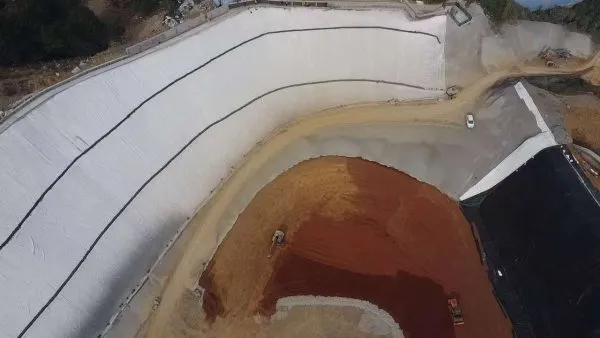
Mining Applications and Liner Performance
Mining projects are another major application area for geosynthetic barrier systems. Heap leach pads, process ponds, tailings facilities, and solution storage areas may require large quantities of geomembrane with controlled physical and mechanical properties.
Chemical resistance is particularly important because liners may be exposed to process solutions under demanding operating conditions. Tensile strength, elongation, puncture resistance, stress crack resistance, UV resistance, and seam quality should also be considered during material selection.
For large mining developments, flexible membrane liner products for mining applications can also be supplied alongside geotextiles, geonets, drainage geocomposites, geogrids, or GCLs according to the overall engineering design.
Key Specifications Buyers Should Compare
Procurement decisions should not be based only on thickness or price per square meter. Buyers should compare technical data and determine whether the proposed material matches the project specification.
Important parameters normally include thickness, density, tensile strength, elongation, tear resistance, puncture resistance, carbon black content and dispersion, oxidative induction time, stress crack resistance, and dimensional consistency.
Surface configuration is another consideration. Smooth geomembranes are commonly used for general containment, while textured surfaces may be selected where increased interface friction is required, particularly on slopes.
Roll width and length can also affect installation efficiency. Appropriate roll dimensions may reduce field seams, installation time, material waste, and handling requirements.
Manufacturing Quality and Procurement Support
Consistent manufacturing is essential for large containment projects. Buyers should evaluate production capability, raw-material control, testing procedures, technical documentation, packaging, export experience, and delivery capacity before confirming an order.
A reliable flexible membrane liner supplier should also be able to review specifications and recommend suitable thicknesses, surface types, roll dimensions, and complementary geosynthetic products according to the intended application.
For international procurement, consolidating geomembranes with geotextiles, geocomposites, geonets, or other required materials can simplify purchasing and shipment coordination.
Geofantex supplies geomembranes and complementary geosynthetic materials for wastewater, mining, landfill, water management, and other containment applications. Buyers can provide the application, required specification, quantity, project standard, and destination to receive a project-specific product recommendation and quotation.


Comments
Post a Comment