Geogrid Retaining Wall Solutions for Soil Reinforcement
Geogrid retaining wall systems are widely used for soil reinforcement, slope stabilization, and infrastructure construction where long-term stability is required. Geofantex provides high-performance geosynthetic reinforcement solutions designed for retaining structures, roads, and civil engineering projects.
With increasing demand for efficient and durable construction methods, reinforced soil technology has become a preferred choice for contractors, engineers, and distributors. Compared with traditional retaining structures, geogrid reinforcement helps improve soil performance, reduce construction complexity, and extend service life.
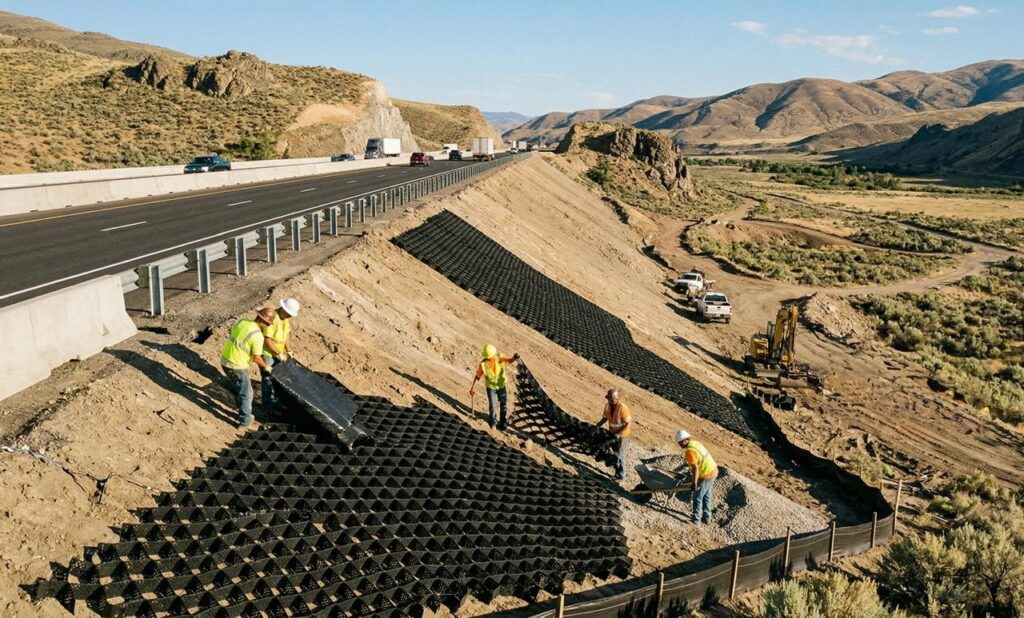
What Is a Geogrid Retaining Wall and How Does It Work?
A geogrid retaining wall is a reinforced soil structure that uses geogrids to improve the strength and stability of retained soil. Instead of depending only on concrete or masonry materials, this system combines soil and geosynthetic reinforcement to create a stronger structural mass.
Geogrids are polymer-based materials, commonly manufactured from polypropylene (PP) or polyester (PET). Their open grid structure allows soil particles to interlock with the reinforcement, creating friction and confinement. This interaction improves the tensile strength of the soil and reduces lateral movement caused by earth pressure.
During construction, geogrid layers are placed horizontally between compacted soil layers behind the retaining wall facing. These reinforcement layers distribute loads over a wider area and help maintain structural stability.
This technology is suitable for reinforced earth walls, highway embankments, slope protection, and other applications where soil stability is critical.
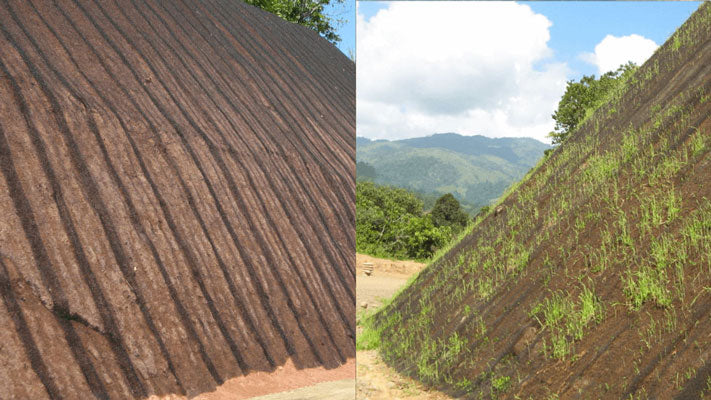
What Are the Main Benefits of Using Geogrids for Retaining Walls?
Using geogrid reinforcement provides several advantages for engineering projects.
First, geogrids improve structural stability by increasing the shear resistance of reinforced soil. They help control deformation and reduce the risk of wall movement, especially in projects with high loads or challenging soil conditions.
Second, geosynthetic reinforcement can reduce construction costs. Compared with conventional concrete retaining solutions, reinforced soil structures usually require fewer construction materials and less heavy equipment. Faster installation also helps improve project efficiency.
Third, geogrids offer excellent durability. High-quality products resist moisture, chemicals, and biological degradation, making them suitable for long-term underground applications.
For contractors and project owners, selecting the right material is important. Geofantex provides geogrid reinforcement systems for retaining wall projects with different tensile strengths and specifications to meet various engineering requirements.
Where Are Geogrid Retaining Wall Systems Commonly Used?
A geogrid retaining wall solution is commonly applied in transportation, construction, and environmental engineering projects.
In road and highway construction, geogrids improve subgrade stability by distributing traffic loads and reducing soil deformation. They are often used in embankments, bridge approaches, and road widening projects.
In residential and commercial developments, geogrid reinforcement helps create stable retaining structures while optimizing available land space. It is also widely used for slope stabilization in areas with uneven terrain.
Other applications include mining facilities, railway projects, industrial platforms, and erosion control systems.
Geofantex supports global customers with geosynthetic reinforcement solutions for civil engineering applications, providing customized products based on project conditions, soil properties, and performance requirements.
How to Choose the Right Geogrid Supplier for Your Project?
Selecting a reliable geogrid supplier is essential for achieving long-term project performance. The product quality, manufacturing experience, and technical support provided by the supplier directly influence construction results.
Before purchasing, customers should consider several factors, including tensile strength, material type, aperture structure, chemical resistance, and compatibility with local construction standards.
A professional manufacturer should be able to provide product specifications, quality certificates, and technical recommendations based on different applications.
Geofantex is an experienced geosynthetics manufacturer supplying geogrids, geotextiles, geomembranes, and geocomposite products to international markets. With strict quality control and customized production capabilities, Geofantex helps customers select suitable reinforcement materials for different projects.
Our custom geogrid retaining wall solutions are designed for contractors, distributors, and engineering companies requiring reliable performance and consistent supply.
Geogrid retaining wall technology provides an efficient solution for improving soil stability, reducing construction costs, and increasing the durability of retaining structures. Through effective soil reinforcement and load distribution, geogrids have become an important material in modern civil engineering.
Choosing an experienced geosynthetics manufacturer ensures better product quality, technical support, and project reliability. Geofantex offers customized reinforcement solutions for retaining walls, roads, slopes, and infrastructure projects worldwide.
Contact Geofantex today to discuss your project requirements and find the right geosynthetic solution.


Comments
Post a Comment