Geocell Slope Protection: Geosynthetic Solutions for Slope Stabilization Projects
Geocell slope protection provides a reliable geosynthetic solution for slope stabilization, erosion control, and long-term ground reinforcement. For contractors, engineers, and project owners looking for durable slope protection systems, geocells offer efficient installation, improved soil stability, and environmentally friendly performance for highways, mining sites, rivers, and infrastructure projects.
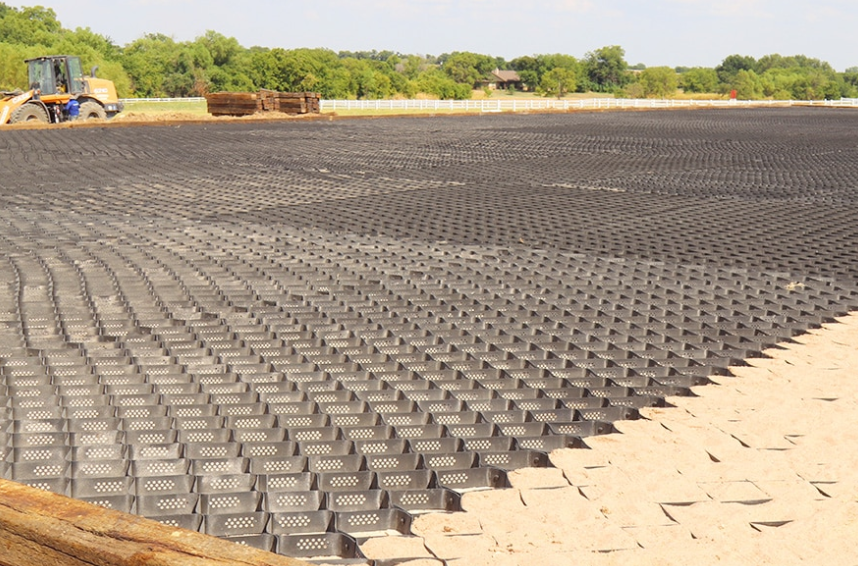
What Is Geocell Slope Protection and How Does It Work?
A geocell system uses three-dimensional cellular structures made from high-density polyethylene (HDPE). During installation, workers expand the panels across the slope surface and fill the cells with soil, gravel, sand, or concrete.
The main function of geocells is to control soil movement through a confinement mechanism. When external forces such as rainfall, surface runoff, or hydraulic pressure affect a slope, the cellular structure limits lateral displacement and improves load distribution. This helps maintain slope integrity and reduces erosion risks.
Unlike traditional concrete slope protection, geocell systems provide flexibility and adaptability. They can adjust to minor ground settlement without cracking and can support vegetation growth when filled with soil. This makes them suitable for projects requiring both engineering performance and environmental compatibility.
For different applications, engineers can combine geocells with other geosynthetic products. For example, geotextile reinforcement solutions for slope stability are often installed beneath geocells to improve separation, filtration, and drainage performance.
Geocell Slope Protection Application in Highway Slope Projects
Highway construction often involves cutting slopes through mountains and unstable soil areas. Without proper protection, exposed slopes may experience severe erosion caused by rainfall, wind, and surface water flow. This can lead to soil loss, slope failure, and increased maintenance requirements.
A highway project in Southwest China provides a practical example. The area experienced frequent rainfall and steep terrain conditions, causing repeated erosion on newly constructed road slopes. The engineering team selected HDPE geocell systems combined with vegetation restoration to improve slope performance.
During installation, geocell panels were expanded across the slope surface and filled with local soil mixed with grass seeds. The cellular confinement structure stabilized the surface layer, while plant roots provided additional reinforcement after vegetation growth.
After completion, the protected slopes showed improved resistance against rainfall erosion and reduced surface soil movement. Compared with traditional concrete protection, the geocell solution required fewer construction resources and created a more natural appearance.
Geosynthetic slope reinforcement systems for highways are increasingly used because they provide a balance between structural stability, construction efficiency, and environmental protection.
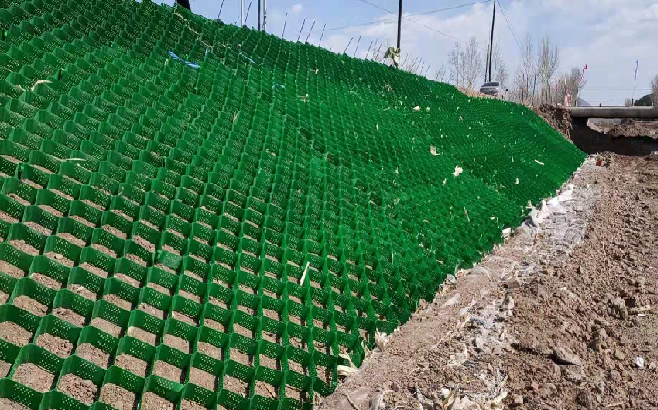
Application in Mining and Environmental Restoration Projects
Mining areas often require long-term slope rehabilitation after excavation activities. Reclaimed slopes usually face challenges such as loose soil, strong runoff, and limited vegetation establishment. A suitable reinforcement system is necessary to maintain slope stability during the restoration process.
A mining rehabilitation project in Australia applied geocell technology together with topsoil filling and native vegetation planting. The geocell structure protected the surface soil from erosion during heavy rainfall events and created a stable foundation for plant growth.
Over time, vegetation coverage increased, while the reinforced slopes maintained good structural performance. This project demonstrated that geosynthetics can support sustainable land restoration by combining engineering reinforcement with ecological recovery.
The application of geocells is also expanding into river embankments, landfill covers, and coastal protection projects. These applications require materials that can withstand changing environmental conditions while maintaining long-term durability.
Why Choose Geocell Systems for Modern Slope Protection Projects?
Modern infrastructure projects require slope protection methods that are reliable, economical, and environmentally responsible. Geocell systems meet these requirements by improving soil confinement, reducing erosion, and simplifying construction procedures.
The major advantages include:
- Enhanced slope stability: The cellular structure improves soil strength and prevents surface movement.
- Effective erosion control: Geocells reduce soil loss caused by rainfall and water flow.
- Environmental adaptability: Soil-filled geocells allow vegetation growth and integrate naturally with landscapes.
In addition, geocell installation is faster than many traditional slope protection methods because lightweight panels are easy to transport and deploy. This reduces labor requirements and construction time, especially in remote areas.
When selecting a geosynthetic solution, engineers should consider slope angle, soil conditions, rainfall intensity, hydraulic requirements, and project service life. Proper design and installation ensure maximum performance and long-term protection.
Geocell slope protection has become an important technology for modern slope stabilization and erosion control projects. Real-world applications in highways, mining rehabilitation, and embankment protection show that geocells can provide effective reinforcement while supporting sustainable construction practices.
With increasing demand for climate-resistant infrastructure, geosynthetic systems will continue to play a key role in protecting slopes and improving project durability. Selecting the right geocell solution based on specific site conditions helps achieve safer, more efficient, and longer-lasting engineering results.


Comments
Post a Comment