Geotextile Fabrics: Woven vs. Nonwoven for Civil Engineering
Geotextile fabrics are essential for road construction, embankment reinforcement, drainage, and soil separation. For engineers and procurement teams, choosing between woven and nonwoven materials requires evaluating tensile strength, permeability, filtration performance, and installation conditions. Understanding these differences helps buyers select appropriate specifications and request accurate quotations.
Geotextile Fabrics: Woven vs. Nonwoven Comparison
Woven geotextiles are manufactured by interlacing polypropylene or polyester yarns, tapes, or filaments. Their structure can provide high tensile strength and controlled deformation, making certain grades suitable for soil stabilization and reinforcement.
Nonwoven geotextiles are produced by bonding synthetic fibers through needle punching or thermal bonding. They are commonly used for filtration, drainage, separation, and geomembrane protection.
| Property | Woven Geotextiles | Nonwoven Geotextiles |
|---|---|---|
| Structure | Interlaced yarns or tapes | Bonded synthetic fibers |
| Main functions | Reinforcement, stabilization, separation | Filtration, drainage, separation |
| Tensile behavior | Often higher tensile stiffness | Varies by product construction |
| Hydraulic behavior | Depends on weave structure and opening size | Commonly suitable for filtration |
| Typical applications | Roads and embankments | Drainage and protection systems |
Neither construction is universally superior. The appropriate choice depends on the required engineering functions and verified product specifications.
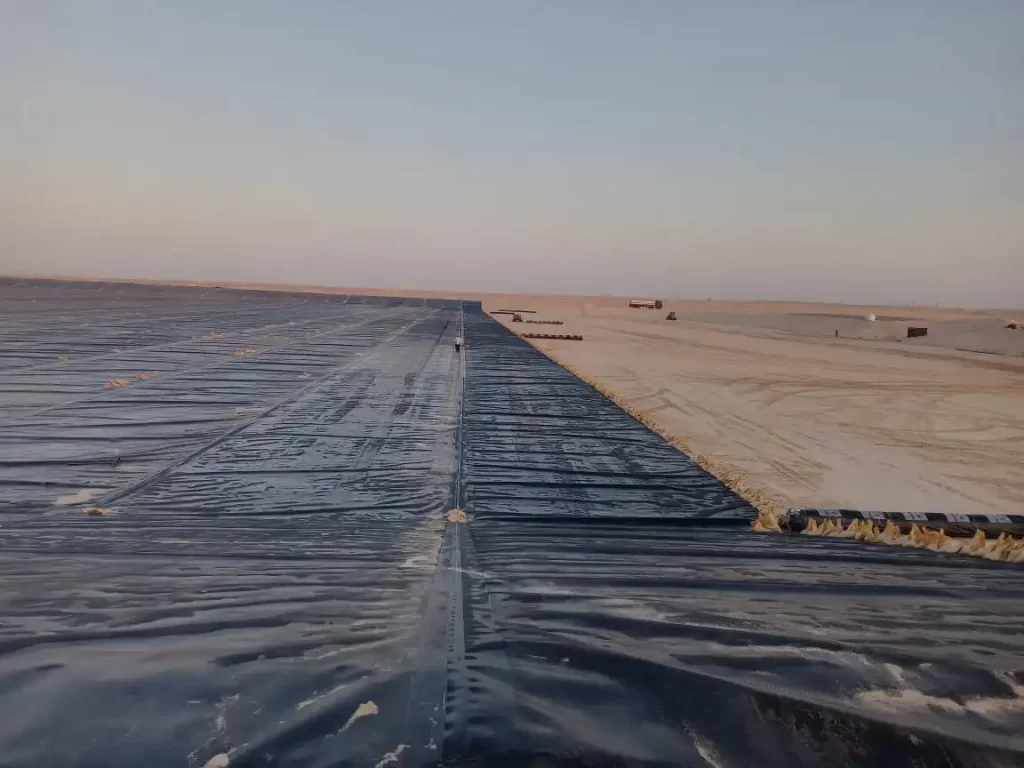
Geotextile Fabrics for Embankment and Road Construction
Embankment Construction Over Soft Soil
Constructing embankments over weak subgrades requires careful evaluation of foundation stability, settlement, and construction loads.
High-strength woven geotextiles may provide basal reinforcement where tensile resistance is required. Nonwoven materials may serve as separation or filtration layers, depending on the design.
Engineers should evaluate undrained shear strength, embankment height, anticipated settlement, construction sequence, and long-term loading.
For projects involving weak foundations, geotextile fabrics for soft-soil embankment reinforcement should be evaluated based on design tensile strength, deformation characteristics, and relevant reduction factors.
Roadbed Stabilization and Aggregate Separation
Road construction requires maintaining separation between the aggregate base and underlying soil. Without an effective separation layer, fine particles may migrate into aggregate voids, potentially affecting pavement performance.
Woven and nonwoven materials can both provide separation when appropriately specified.
Selection should consider soil gradation, aggregate size, construction traffic, hydraulic conditions, and installation survivability.
For road projects, geotextile fabrics for roadbed stabilization and aggregate separation should be selected based on the required mechanical and hydraulic properties rather than fabric weight alone.
Technical Properties and Testing Standards
Reliable product comparisons require standardized laboratory testing and project-specific performance requirements.
Important properties include:
- Tensile strength: ASTM D4595 for wide-width tensile testing.
- Apparent opening size: ASTM D4751 for filtration opening characteristics.
- Permittivity: ASTM D4491/D4491M for cross-plane water flow.
- Puncture resistance: ASTM D6241 for static puncture resistance.
- Mass per unit area: ASTM D5261 for material identification.
For reinforcement applications, tensile stiffness, creep behavior, and installation damage must also be considered.
A product that meets one mechanical requirement may not necessarily satisfy filtration or long-term durability requirements.
Comparing Geotextiles with Other Geosynthetics
Geogrids and drainage geocomposites are frequently considered alongside woven and nonwoven materials.
Geogrids are primarily designed for reinforcement and mechanical interaction with surrounding soil or aggregate. Unlike conventional geotextiles, they generally do not provide continuous separation or filtration.
Drainage geocomposites combine filtration layers with a drainage core to facilitate in-plane water flow.
For projects requiring multiple functions, combining different geosynthetic products may be appropriate.
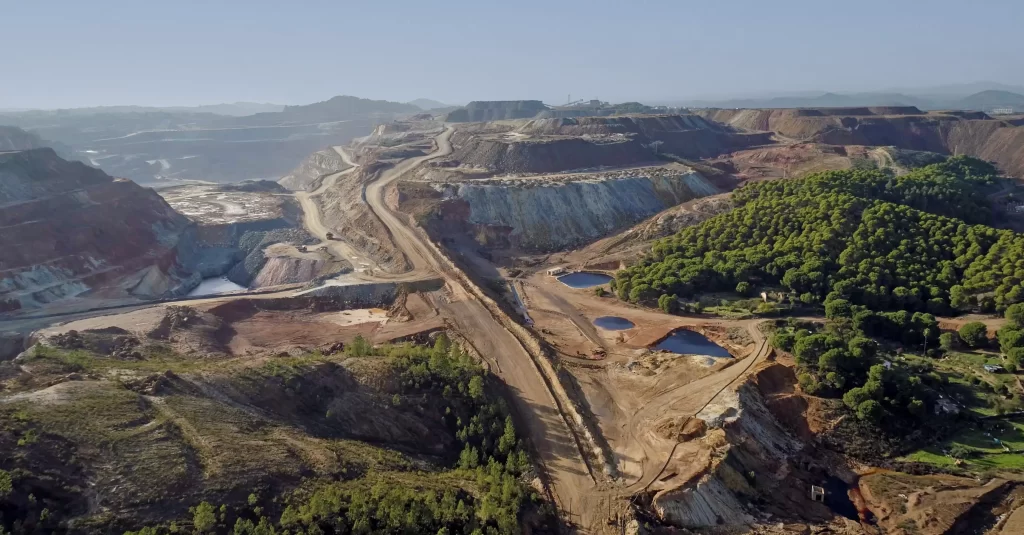
How to Select the Right Geotextile Specification
Before selecting geotextile fabrics, engineers and buyers should identify the primary engineering function and establish measurable performance requirements.
For road stabilization, prioritize relevant tensile properties, separation performance, and installation survivability.
For drainage, evaluate apparent opening size, permittivity, soil retention, and clogging compatibility.
For embankment reinforcement, assess design strength, strain behavior, creep, and foundation conditions.
Buyers reviewing geotextile fabric specifications for civil engineering projects should compare manufacturers' test reports against project requirements rather than relying exclusively on nominal mass per unit area or product descriptions.
Request a Geotextile Recommendation or Quotation
Geofantex provides woven and nonwoven geotextile solutions for infrastructure, drainage, soil stabilization, and environmental engineering applications.
To request a product recommendation or quotation, provide the project application, soil conditions, required engineering functions, applicable standards, technical specifications, estimated quantity, preferred roll dimensions, and delivery destination.
When detailed specifications are unavailable, engineering drawings and project conditions can help identify suitable products for further technical evaluation.
Contact Geofantex to discuss your requirements and request a quotation.


Comments
Post a Comment