Non Woven Geotextile Fabric Applications in Infrastructure Projects
Non woven geotextile fabric is widely specified for highway and geotechnical projects requiring reliable separation, filtration, drainage, and protection. For contractors and project buyers, selecting the correct material can help stabilize aggregate layers, control soil migration, improve drainage performance, and reduce long-term maintenance. This case analysis examines how nonwoven geotextiles perform under practical construction conditions.
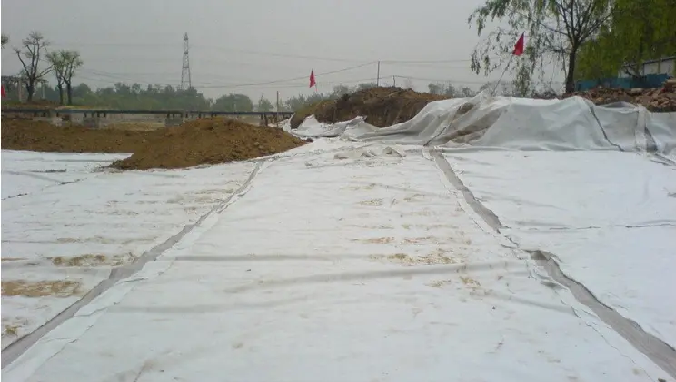
Why Non Woven Geotextile Fabric Is Used in Highway Construction
Highway pavement systems are exposed to repeated traffic loads, groundwater movement, rainfall, and variations in subgrade conditions. When aggregate is installed directly over weak or fine-grained soil, contamination can occur as soil particles migrate into the aggregate layer.
A geotextile placed between these materials creates a permeable separation layer. Water can pass through while soil particles are retained, helping preserve the thickness and structural function of the aggregate base.
Case Analysis: Highway Construction over Weak Subgrade
Consider a highway section constructed over soft, moisture-sensitive subgrade. Without separation, construction traffic and subsequent cyclic loading can force coarse aggregate downward while fine soil moves upward. The resulting contamination can gradually reduce drainage efficiency and pavement stability.
Installing a needle-punched nonwoven geotextile before placing the aggregate provides a defined interface between the subgrade and base course.
For this type of project, engineers normally evaluate tensile strength, puncture resistance, characteristic opening size, permeability, elongation, and resistance to installation damage rather than specifying the product by mass per unit area alone.
For project procurement, non woven geotextile fabric for highway separation can therefore be selected according to the subgrade condition, aggregate gradation, expected loading, and hydraulic requirements.
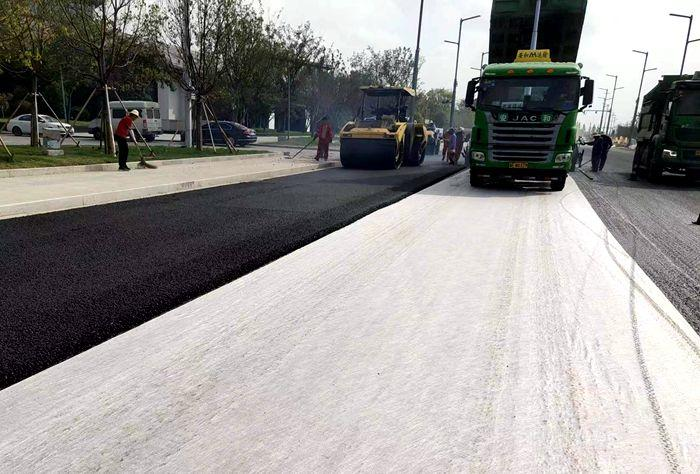
Non Woven Geotextile Fabric for Geotechnical Applications
Geotechnical projects present different challenges because soil characteristics, groundwater conditions, loading, and drainage requirements can change significantly from one site to another.
Non woven geotextile fabric can function as a filter between natural soil and drainage aggregate. Its interconnected fiber structure allows controlled water flow while restricting the migration of soil particles.
This is particularly useful in subsurface drainage systems, embankments, retaining structures, slope works, and foundation drainage.
Case Analysis: Geotechnical Drainage System
Consider an engineered slope where groundwater must be collected and discharged through a gravel drainage zone. If fine soil enters the gravel, void spaces can gradually become clogged, reducing the hydraulic capacity of the system.
A properly selected geotextile can be installed between the soil and drainage aggregate. It acts as a filtration interface, allowing water to enter the drainage layer while limiting soil loss.
However, selecting an excessively small opening size is not automatically better. The geotextile must provide an appropriate balance between soil retention and permeability.
For such projects, non woven geotextile fabric for geotechnical drainage should be evaluated according to soil gradation, expected water flow, opening size, permeability, mechanical resistance, and long-term filtration requirements.
Key Specifications for Non Woven Geotextile Fabric Selection
Product selection should begin with the engineering function rather than GSM alone. Two geotextiles with similar mass per unit area may have different mechanical and hydraulic properties because of differences in polymer, fiber structure, manufacturing process, and quality control.
Important parameters include:
- Mass per unit area (g/m²)
- Tensile strength and elongation
- CBR or static puncture resistance
- Dynamic perforation resistance
- Characteristic opening size
- Water permeability
- Thickness
- UV resistance when relevant
For highway applications, installation survivability and separation performance may receive greater attention. For geotechnical drainage, filtration compatibility and water flow characteristics can become the primary considerations.
Buyers evaluating non woven geotextile fabric specifications and applications should therefore provide project information such as soil conditions, application, required standards, roll dimensions, and technical specifications when requesting a quotation.
From Project Conditions to Geotextile Specification
A highway built over weak subgrade does not necessarily require the same product as a drainage system installed behind a retaining structure. The function of the geotextile determines which properties should receive priority.
Non woven geotextile fabric can provide an efficient engineering interface when its filtration, separation, drainage, and protection characteristics are matched to actual site conditions.
For contractors, distributors, and engineering procurement teams, reviewing the project environment before selecting a specification helps avoid both under-specification and unnecessary material cost.
Working with a geosynthetics manufacturer that can provide multiple weights, roll dimensions, technical data, and project-specific recommendations also simplifies procurement for infrastructure projects.


Comments
Post a Comment