Geogrid Fabric for Retaining Walls and Reinforced Slopes
Geogrid fabric is widely specified for retaining walls, reinforced slopes, road bases, and other soil reinforcement projects. For contractors, engineers, and material buyers, selecting the correct geogrid requires more than comparing tensile strength and price. Polymer type, aperture structure, long-term performance, soil conditions, and project specifications should all be considered before procurement.
What Is Geogrid Fabric and How Does It Work?
Geogrid is a polymeric geosynthetic designed primarily for soil reinforcement and stabilization. Its open-grid structure consists of interconnected ribs and apertures that interact with soil or aggregate.
When installed within compacted fill, the reinforcement develops tensile resistance while the surrounding particles interact with the grid through friction and interlocking. This interaction can restrict lateral soil movement, improve load distribution, and increase the stability of the reinforced soil mass.
Common materials include polypropylene (PP), high-density polyethylene (HDPE), and polyester (PET). Depending on the manufacturing method and required performance, geogrids may be uniaxial, biaxial, or other engineered grid structures.
For permanent structures, engineers should evaluate tensile properties, creep behavior, installation damage, durability, and soil-reinforcement interaction rather than relying on nominal strength alone.
For additional product selection information, buyers can review our geogrid fabric specifications and reinforcement solutions before determining the appropriate product for a project.
How Is Geogrid Fabric Used in Retaining Walls?
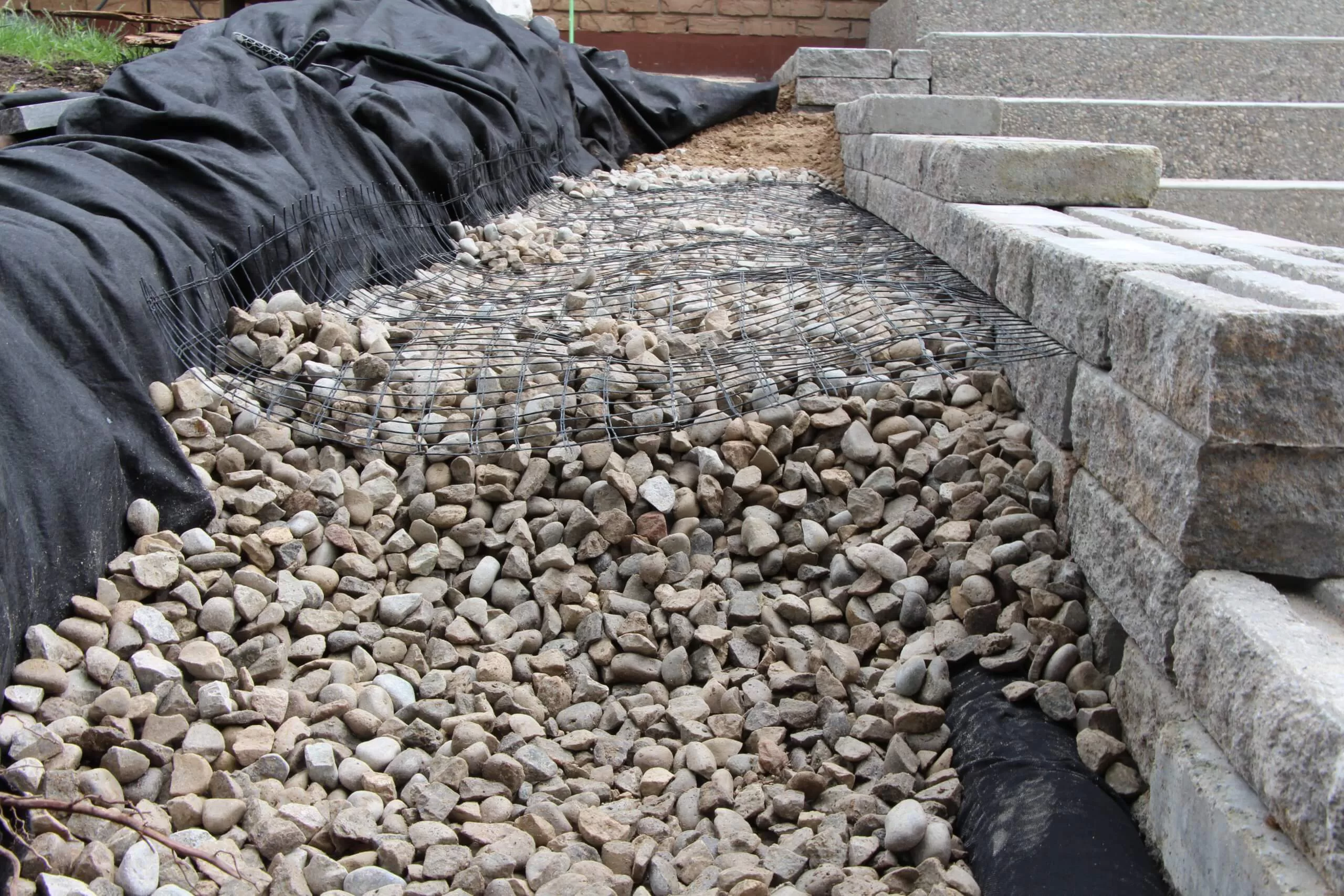
Mechanically stabilized earth (MSE) walls use horizontal reinforcement layers within compacted backfill. Each layer extends behind the wall facing and contributes to the stability of the soil mass.
The required reinforcement length, vertical spacing, tensile capacity, and connection method depend on wall geometry, surcharge loads, backfill properties, foundation conditions, and design requirements.
Geogrid-reinforced retaining walls can be used for highways, bridge approaches, commercial developments, industrial sites, and other projects where conventional retaining structures may be less practical.
For project planning, see our geogrid fabric for retaining wall reinforcement information to compare reinforcement options for different wall conditions.
Can Geogrid Be Used for Reinforced Slopes?
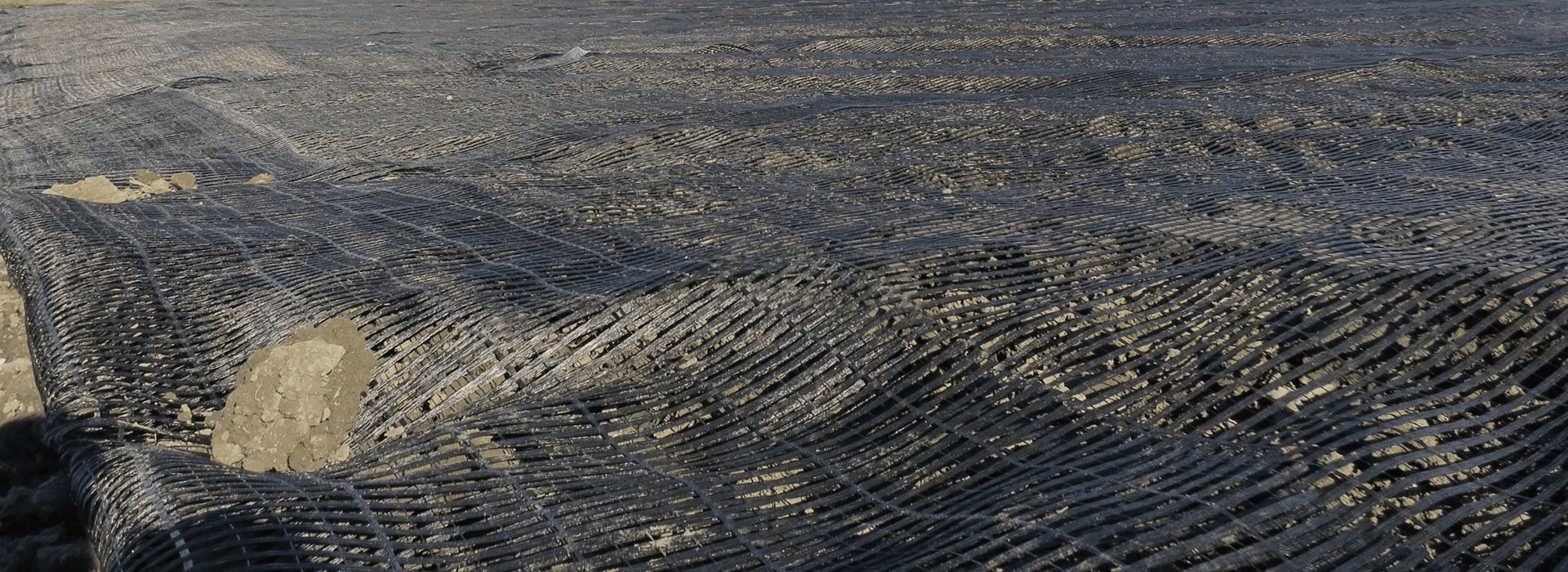
Yes. Geogrid fabric is commonly incorporated into reinforced soil slopes where additional tensile reinforcement is required to improve slope stability.
Multiple reinforcement layers are placed within compacted fill as the slope is constructed. The resulting reinforced soil structure can help resist internal movement and allow steeper engineered slopes where appropriate.
FHWA guidance describes reinforced soil slopes as a form of mechanically stabilized earth incorporating planar reinforcing elements, typically geosynthetics. Geosynthetic reinforcement can also provide practical solutions where right-of-way or available construction space is limited.
Typical applications include highway embankments, infrastructure corridors, commercial developments, landfill-related earthworks, and reconstructed slopes.
Project engineers and contractors can explore geogrid fabric for reinforced slope applications when evaluating reinforcement for steep or space-constrained earth structures.
What Should Buyers Consider When Selecting Geogrid?
Purchasing decisions should begin with the engineering requirements rather than roll price alone. Important parameters include tensile strength, strength at specified strain, polymer type, aperture dimensions, roll dimensions, junction characteristics, creep resistance, durability, and installation damage resistance.
The backfill also matters. Particle size distribution, friction characteristics, compaction requirements, drainage conditions, and interaction with the reinforcement can influence system performance.
For retaining walls and slopes, long-term design properties can be particularly important because the reinforcement may remain under sustained load throughout the structure's service life. Project specifications may therefore require reduction factors addressing creep, installation damage, and environmental durability.
Buyers should provide suppliers with the application, required tensile properties, dimensions, relevant standards, project drawings, soil information where available, and required quantity. This makes technical evaluation and quotation more accurate.
Ultimately, the correct geogrid should be selected as part of an engineered soil-reinforcement system. Matching material properties with soil conditions, structural requirements, installation methods, and design life provides a more reliable basis for procurement than comparing nominal tensile strength alone.


Comments
Post a Comment