Geotextile Fabric for French Drain: Selection and Applications
Geotextile fabric for french drain systems is widely specified for residential drainage, retaining walls, landscaping, and civil engineering projects. For contractors and distributors sourcing drainage materials, selecting the correct geotextile helps prevent soil migration, protect drainage aggregate, and maintain long-term water flow. Available in different weights, roll sizes, and filtration properties, nonwoven geotextiles can be matched to specific soil and project conditions.
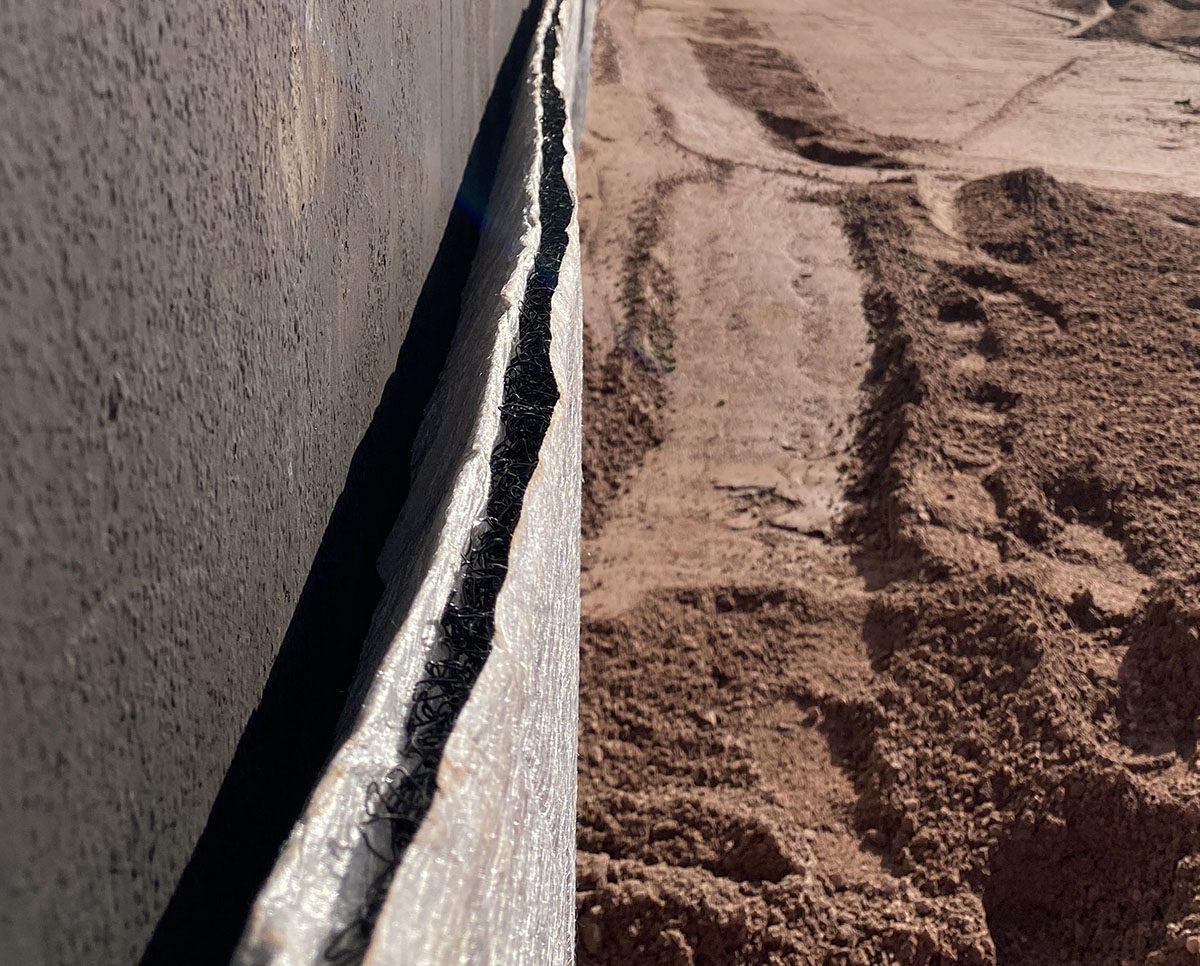
Why Use Geotextile Fabric for French Drain Systems?
A French drain typically consists of a perforated drainage pipe surrounded by clean gravel or crushed stone. Although the aggregate creates a highly permeable drainage zone, surrounding soil can gradually migrate into its voids. Over time, accumulated fine particles may reduce drainage efficiency.
A geotextile creates a filtration and separation interface between the natural soil and drainage aggregate. Water can pass through the fabric while excessive movement of soil particles is controlled.
For this reason, choosing geotextile fabric for french drain filtration systems is particularly important where the surrounding soil contains fine sand, silt, or other particles that can migrate toward the drainage layer.
Needle-punched nonwoven geotextiles are commonly used because their fiber structure combines permeability, filtration, flexibility, and puncture resistance. However, selection should consider more than fabric weight. Permittivity, apparent opening size, tensile strength, puncture resistance, and soil characteristics can all influence performance.
Geotextile Fabric for French Drain in Residential Landscaping
Residential landscaping is one of the most common applications.
For example, consider a house where water collects near the lawn and foundation after heavy rainfall. Persistent moisture can damage landscaping and create uncomfortable wet areas around the property.
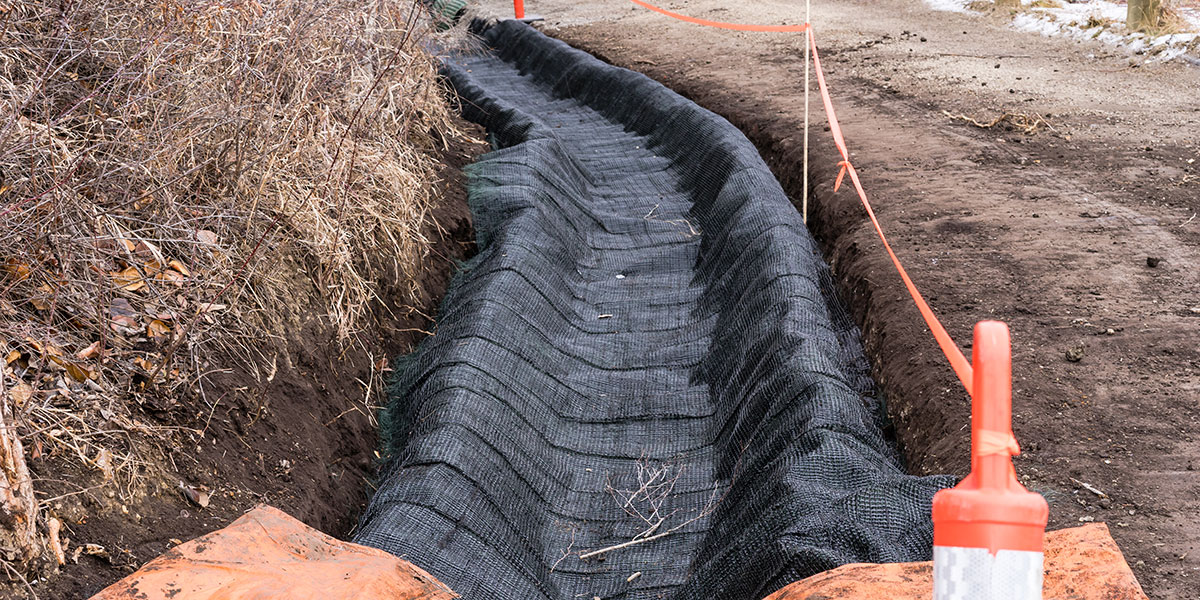
To solve the problem, contractors first excavate a drainage trench along the affected area. They then install a permeable separation layer along the bottom and sides.
Next, clean drainage stone is placed inside the trench. A perforated pipe is positioned on the stone and covered with additional aggregate. Finally, the separation material is folded over the aggregate before backfilling begins.
This arrangement creates a filtered drainage envelope. Groundwater can enter the drainage zone while surrounding soil remains separated from the clean stone.
For residential projects, selecting geotextile fabric for french drain landscape drainage can be especially useful around foundations, lawns, gardens, driveways, patios, and other areas affected by persistent surface or subsurface water.
Retaining Wall Drainage Case
Retaining walls often require more careful drainage design.
After rainfall, water can accumulate behind the wall. If the system cannot remove this water efficiently, hydrostatic pressure may increase. Over time, excessive pressure can affect the stability and durability of the structure.
A common solution uses clean drainage aggregate behind the retaining wall. Contractors also install a perforated pipe near the base to collect and discharge water.
A permeable separation layer is placed between the soil and drainage stone. This layer helps prevent fine soil particles from entering the aggregate. At the same time, it allows water to move toward the drainage zone.
Consider a residential slope supported by a segmental retaining wall. During heavy rainfall, runoff and groundwater can move through the backfill.
Without proper separation, fine particles may gradually enter the drainage stone. As contamination increases, water has less space to flow.
Adding a suitable filtration layer helps maintain a cleaner drainage zone. As a result, the system can continue directing water toward the outlet.
This makes retaining wall geotextile fabric for french drain applications relevant not only to residential landscaping but also to commercial developments, road embankments, reinforced slopes, and other earth-retaining structures.
How to Select the Right Material
Not every geotextile is suitable for every drainage project. Selection should be based on the interaction between the soil, geotextile, aggregate, and expected hydraulic conditions.
Important specifications include water permeability, apparent opening size, tensile strength, puncture resistance, elongation, fabric mass, and roll dimensions. The surrounding soil gradation should also be considered, particularly on engineering projects where filtration performance is critical.
Contractors should also distinguish drainage geotextiles from ordinary weed-control landscape fabrics. A product intended primarily for vegetation control may not provide the filtration properties or mechanical performance required for engineered subsurface drainage.
For larger projects, specifying geotextile fabric for french drain engineering applications according to project conditions can improve material selection and reduce the risk of premature drainage-system deterioration.
Installation Considerations
The trench should first be excavated to the required dimensions and gradient. Sharp stones, roots, and debris that could damage the fabric should be removed.
The geotextile is then placed along the bottom and sides of the trench with sufficient material remaining to wrap or cover the drainage aggregate where required. Clean aggregate is placed carefully to avoid displacement or puncture, followed by the perforated drainage pipe and the remaining stone.
Overlaps should be sufficient to prevent soil from entering through gaps. During backfilling, unnecessary traffic directly over exposed geotextile should also be avoided.
Most importantly, geotextile does not compensate for an incorrectly designed drainage system. Pipe diameter, aggregate gradation, trench slope, drainage capacity, and the final discharge point must all be considered as part of the complete system.
From Material Selection to Project Supply
French drains may appear simple, but their long-term performance depends on maintaining a stable interface between soil and drainage aggregate. Properly selected nonwoven geotextiles provide filtration and separation while allowing subsurface water to enter the drainage zone.
For geosynthetic distributors, contractors, landscapers, and engineering companies, sourcing geotextile fabric for french drain projects should therefore consider technical specifications, project soil conditions, roll dimensions, required quantity, and installation requirements rather than price alone.
Manufacturers capable of supplying multiple specifications, technical data, customized roll sizes, and bulk quantities can help buyers select a more appropriate material for residential drainage, retaining walls, landscaping, and larger civil engineering projects.


Comments
Post a Comment