Geomembrane Liner for Mining and Landfill Projects
Geomembrane liner systems are widely specified by contractors and engineers who need reliable containment for mining, landfill, and environmental projects. Selecting the correct material requires evaluating chemical exposure, subgrade conditions, puncture risk, drainage, slope stability, and expected service life—not simply comparing membrane thickness or purchase price.
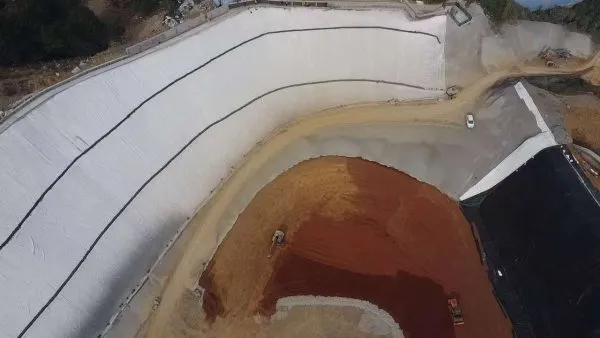
Why Geomembrane Liner Systems Matter
A containment system creates a low-permeability barrier between liquids, waste, or process solutions and the surrounding soil and groundwater. HDPE is frequently selected because of its chemical resistance, weldability, mechanical properties, and suitability for large-scale installations.
In practical engineering, however, the membrane normally works with other geosynthetics. Nonwoven geotextiles provide cushioning and puncture protection, geonets or drainage composites control liquids and gases, while geosynthetic clay liners can provide an additional low-permeability barrier.
For buyers evaluating geomembrane liner solutions for containment projects, the complete system should therefore be considered during specification rather than treating each geosynthetic product independently.
Geomembrane Liner Case: Mining Heap Leach Facility
Mining applications are particularly demanding because containment materials can be exposed to aggressive process solutions, heavy ore loads, UV radiation, temperature fluctuations, and significant construction stresses.
A large heap leach expansion in northern Nevada required approximately 10.8 million ft²—around 1.0 million m²—of 80-mil HDPE membrane for its heap leach pad. Additional material was installed for associated process ponds, bringing the project total to more than 12.2 million ft².
This project shows why mining applications require careful engineering. Low permeability alone does not guarantee successful containment. The installed system must also withstand large loads and remain stable during operation.
Textured HDPE membranes may be considered on slopes where higher interface friction is required. Protective geotextiles can also reduce damage caused by contact with rough subgrades or aggregate.
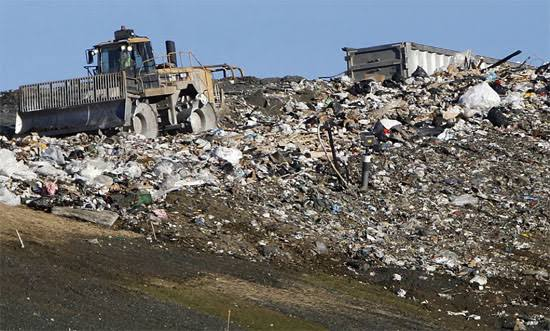
Case Study: Landfill Containment
Landfills present different containment challenges. The lining system must isolate waste and leachate from the surrounding environment while accommodating settlement, drainage, and long-term chemical exposure.
One useful field example is a double-lined leachate storage pond at the Headquarters Landfill in Cowlitz County, Washington. The facility was constructed in 1993 with a storage capacity of approximately 5 million gallons. After around 25 years of operation, researchers examined the exposed membrane and found that it remained in reasonably good condition and could still be repaired.
The case provides valuable evidence for buyers considering geomembrane liner systems for landfill projects where long-term containment performance is a primary specification requirement.
It also demonstrates that material selection is only one factor affecting service life. Proper subgrade preparation, welding, installation quality control, drainage design, inspection, and maintenance all contribute to successful long-term performance.
Designing a Complete Geosynthetic Containment System
A membrane should rarely be evaluated as an isolated construction material. Depending on site conditions, an engineered system can incorporate several geosynthetic layers with different functions.
A nonwoven geotextile may protect the membrane against puncture. A geonet or geocomposite can provide drainage pathways for leachate, liquids, or gases. GCL may provide secondary containment where additional hydraulic protection is required.
This integrated approach helps engineers address several potential failure mechanisms simultaneously.
When comparing geomembrane liner specifications and geosynthetic protection systems, buyers should review tensile properties, puncture resistance, chemical compatibility, interface friction, seam performance, installation conditions, and project-specific regulatory requirements.
Procurement Considerations for Project Buyers
Project requirements vary significantly between mining and landfill applications. Mining facilities may prioritize chemical resistance, high mechanical loading, slope stability, and resistance to installation damage. Landfills additionally require careful consideration of leachate management, waste settlement, gas drainage, and long-term environmental containment.
Thickness alone therefore does not determine whether a geomembrane liner is suitable. Material type, surface texture, roll dimensions, welding requirements, supporting geosynthetics, and installation conditions should all be evaluated against the engineering design.
For large projects, providing drawings, application conditions, required specifications, quantities, and relevant standards to the manufacturer can help determine appropriate product configurations and prepare a more accurate quotation.


Comments
Post a Comment