Geogrid Retaining Wall Applications and Selection Factors
Geogrid retaining wall systems provide contractors, distributors, and infrastructure developers with an efficient method for stabilizing soil and constructing reinforced retaining structures. For buyers sourcing geogrids for highways, embankments, commercial developments, or large civil engineering projects, selecting the correct tensile strength, polymer type, and reinforcement configuration is essential for long-term performance and cost control.
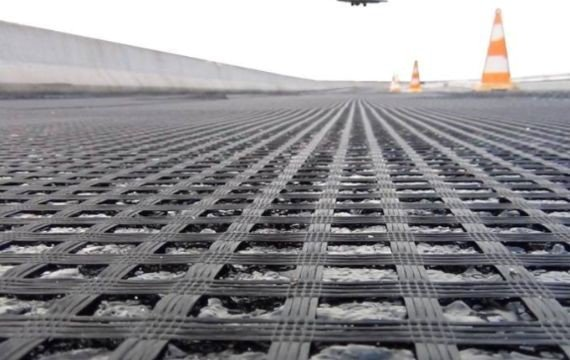
Why Use a Geogrid Retaining Wall?
Geosynthetic reinforcement works with compacted backfill to create a stable soil structure. During construction, workers place reinforcement layers horizontally within the fill. These layers interact with the surrounding soil and help control lateral movement.
Compared with many conventional retaining structures, reinforced soil construction can reduce dependence on massive concrete sections while offering greater flexibility in wall geometry and construction sequencing. This makes the system particularly suitable for highway widening, bridge approaches, industrial developments, embankments, and steep grade changes.
For contractors evaluating different reinforcement methods, our geogrid retaining wall reinforcement solutions can be supplied according to specified tensile strength, roll dimensions, and project requirements.
Geogrid Retaining Wall Applications in Highway Projects
Highway infrastructure is an important application for geosynthetic soil reinforcement. Engineers can use this method for road widening, elevated embankments, bridge approaches, and interchange construction. It is also useful when a project has limited construction space.
The reinforcement distributes tensile forces through the compacted backfill, while the facing system retains the front of the reinforced soil structure. Depending on the engineering design, facing options may include segmental concrete blocks, precast panels, gabions, or wrapped geosynthetic systems.
This construction method is particularly useful where contractors need to achieve significant elevation differences without substantially increasing the project footprint.
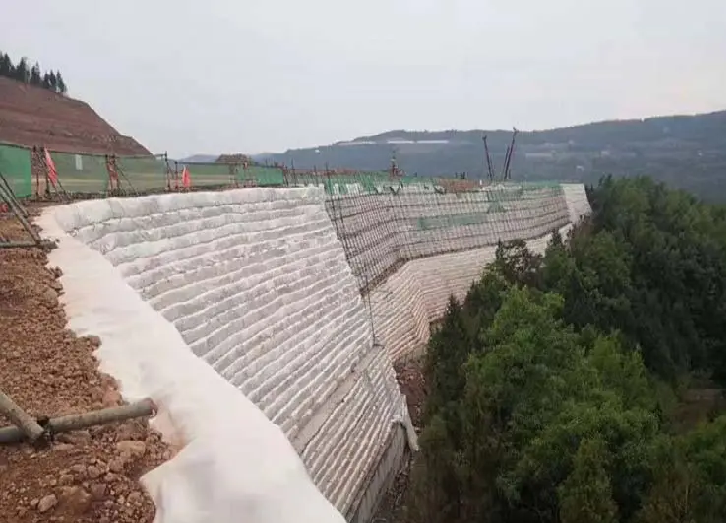
Key Geogrid Selection Factors
Product selection should be based on engineering requirements rather than nominal tensile strength alone. Important parameters can include ultimate tensile strength, long-term design strength, creep behavior, polymer type, junction efficiency, installation damage resistance, durability, and interaction with the specified backfill.
Uniaxial geogrids are commonly used when the primary tensile reinforcement is required in one direction. Depending on the project specification, different polymer structures and strength grades can be considered.
International buyers should also review technical data sheets, laboratory test reports, roll dimensions, production standards, and quality-control documentation before purchasing. Geofantex can provide geogrid retaining wall material specifications to help distributors, contractors, and project procurement teams compare suitable product grades.
Installation and Reinforced Wall Performance
Correct installation is as important as selecting the appropriate geogrid. Reinforcement layers must follow the designed length, vertical spacing, orientation, and elevation. Backfill should also satisfy project specifications and be compacted correctly.
Drainage requires particular attention. Water accumulation behind a retaining structure can increase pressure and negatively affect wall performance. Appropriate drainage materials may therefore be incorporated according to site conditions and engineering design.
Wall height, surcharge loads, foundation conditions, reinforcement length, facing connection, backfill properties, and groundwater conditions should all be considered during structural design.
Geogrid Retaining Wall Procurement Considerations
Large civil engineering projects should begin with a clear technical specification. Before requesting quotations, buyers should confirm tensile strength, roll size, polymer type, testing standards, estimated quantity, and project schedule.
Price per square meter is important, but it should not be the only purchasing criterion. Consistent manufacturing, technical documentation, packaging, container optimization, production capacity, and export experience can significantly affect project execution.
For international shipments, optimized roll dimensions and loading quantities can also help control logistics costs. Buyers planning container-scale orders can request our geogrid retaining wall supply options based on project quantity, required specifications, and destination port.
Geofantex manufactures and supplies geogrids for retaining walls, road reinforcement, embankments, slopes, and other soil stabilization applications. Multiple tensile-strength grades and roll dimensions are available to support different engineering and procurement requirements.
For your next geogrid retaining wall project, send us the required tensile strength, dimensions, quantity, application, testing requirements, and destination. Our team can review the specification, recommend a suitable product option, and prepare a project-based quotation.


Comments
Post a Comment