Geocomposite Subsoil Drain: How It Improves Subsurface Drainage Performance
Geocomposite subsoil drain systems provide an efficient solution for collecting and transporting subsurface water in roads, slopes, retaining structures, and other civil engineering projects. For contractors and project buyers, selecting the correct drainage composite can reduce aggregate requirements, simplify installation, and provide predictable hydraulic performance.
A typical system combines a polymer drainage core with a nonwoven geotextile filter. Water passes through the geotextile while soil particles are retained, then travels through the drainage core toward collector pipes or designated outlets.
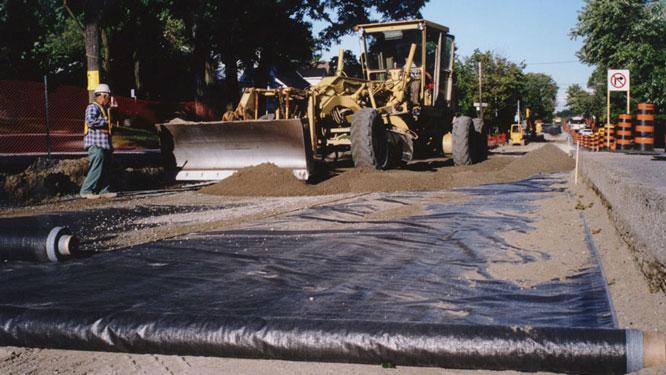
How Does a Geocomposite Subsoil Drain Work?
A geocomposite drain performs three primary functions: filtration, collection, and drainage.
The geotextile filter allows groundwater to enter the system while restricting soil particle migration. Once water reaches the polymer core, its three-dimensional structure creates an in-plane drainage path. Water can then move toward a pipe, trench, or other discharge point.
Compared with a conventional thick aggregate drainage layer, the prefabricated structure can reduce excavation and the amount of drainage stone required. This is particularly useful where construction space is restricted or transporting graded aggregate is expensive.
For projects requiring detailed product configurations, review our geocomposite subsoil drainage solutions for civil engineering to compare drainage-core structures and filtration options.
Why Use Geocomposite Subsoil Drain in Road Construction?
Road structures are particularly sensitive to excessive subsurface moisture. Water entering the pavement system can reduce subgrade strength and contribute to deformation, pumping, and premature pavement deterioration.
When water remains inside the pavement structure, it can weaken the subgrade. It may also contribute to pumping, deformation, and premature pavement damage.
This rapid drainage capability makes geocomposites useful for highways, access roads, parking areas, railway infrastructure, and other transportation projects where controlling water is essential to long-term structural performance.
Designers evaluating transportation drainage systems can explore our geocomposite subsoil drain for road construction applications for project-specific product selection.
What Properties Should Be Checked Before Selection?
Product thickness alone does not determine drainage performance. Engineers and procurement teams should evaluate the hydraulic and mechanical properties of the composite under conditions representative of the actual project.
One of the most important parameters is transmissivity—the ability of a geosynthetic to transport water within its plane. ASTM D4716/D4716M provides a standardized method for evaluating in-plane flow and hydraulic transmissivity.
Key parameters include:
- Transmissivity and flow capacity
- Hydraulic gradient
- Applied normal stress
- Drainage-core compressive strength
- Long-term compressive creep
- Geotextile permittivity
- Apparent Opening Size (AOS)
- Soil retention characteristics
- Chemical and biological clogging potential
- Installation survivability
Therefore, buyers should compare products based on project loading, soil conditions, required flow capacity, and long-term performance rather than simply comparing unit weight or thickness.
Where Can Geocomposite Drain Be Used?
A geocomposite subsoil drain is suitable for civil engineering structures where groundwater or infiltration must be collected and transported before it affects structural performance.
Typical applications include road subgrades, railway systems, retaining walls, bridge abutments, foundations, tunnels, landfill structures, landscaped areas, and slope stabilization projects.
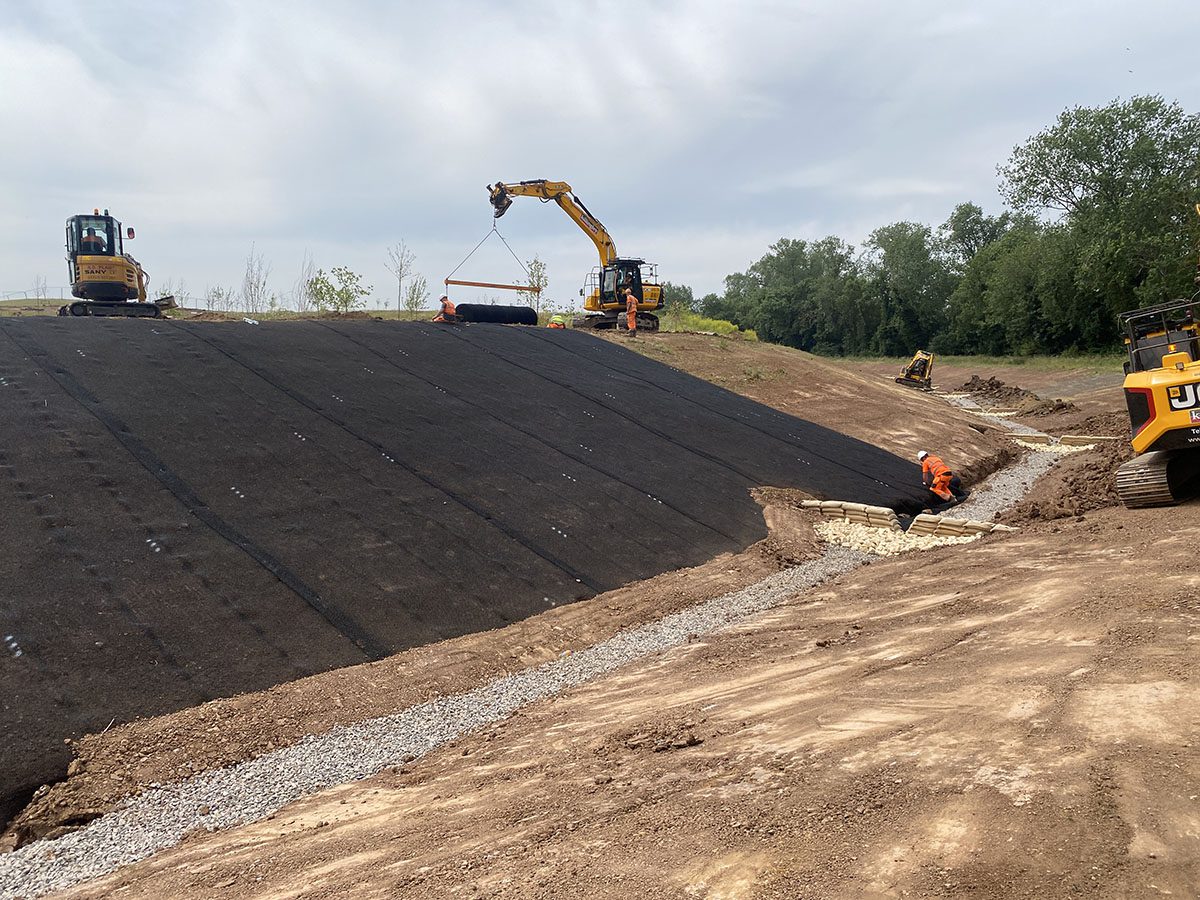
On slopes, drainage composites can intercept subsurface water and direct it toward controlled outlets. Reducing excess pore-water pressure can support more stable soil conditions and complement other stabilization measures such as geogrids, anchors, or erosion-control systems.
For retaining walls, roads, slopes, and other infrastructure projects, our geocomposite subsoil drain systems for project drainage can be configured according to required flow capacity, loading conditions, filtration requirements, roll dimensions, and installation conditions.
Correct specification remains essential. Long-term flow capacity, filtration compatibility, reduction factors, outlet arrangement, and installation conditions should all be considered before final product selection.


Comments
Post a Comment