Geosynthetic Clay for Environmental Containment Applications
Geosynthetic clay is a prefabricated barrier material widely used in containment engineering projects such as landfills, mining facilities, and water storage systems. It provides extremely low permeability and reliable long-term sealing performance, making it a preferred alternative to traditional compacted clay liners in modern geotechnical applications.
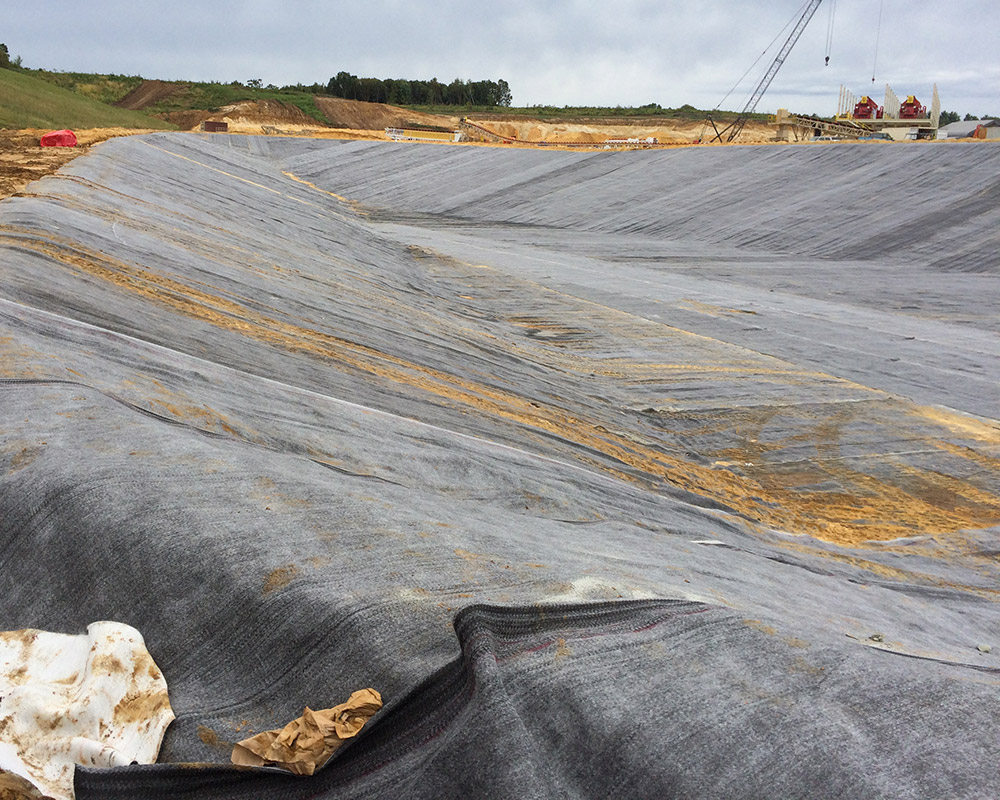
Geosynthetic Clay in Landfill Engineering Systems
In landfill construction, this barrier system is commonly installed as a base liner or capping layer. Its main function is to prevent leachate from entering surrounding soil and groundwater. The structure usually consists of sodium bentonite enclosed between geotextiles. Once hydrated, it forms a self-sealing hydraulic barrier.
A key engineering advantage is its ability to maintain extremely low hydraulic conductivity even under stress conditions. Composite liner systems incorporating geosynthetics can reduce contaminant migration risk by over 99% compared to single natural clay barriers.
In practice, designers often combine this material with geomembranes for enhanced protection. A technical overview of such systems can be found in geosynthetic clay containment design principles for landfill sealing, which explains how layered barrier systems improve long-term environmental safety.
Geosynthetic Clay in Mining and Tailings Management
In mining projects, this barrier system is widely used in heap leach pads and tailings storage facilities. It also supports process water containment systems. The bentonite core reacts with moisture and expands. As a result, it forms a dense sealing layer that limits fluid movement.
Mining environments often involve chemically aggressive conditions, making material selection critical. Field studies published in ASTM geotechnical performance reports show that properly confined bentonite-based liners can achieve hydraulic conductivity values as low as 1×10⁻¹¹ m/s under controlled stress conditions.
To improve system durability, engineers often integrate advanced geosynthetic clay solutions for mining containment and slope protection, especially in high-rainfall or acid drainage zones.
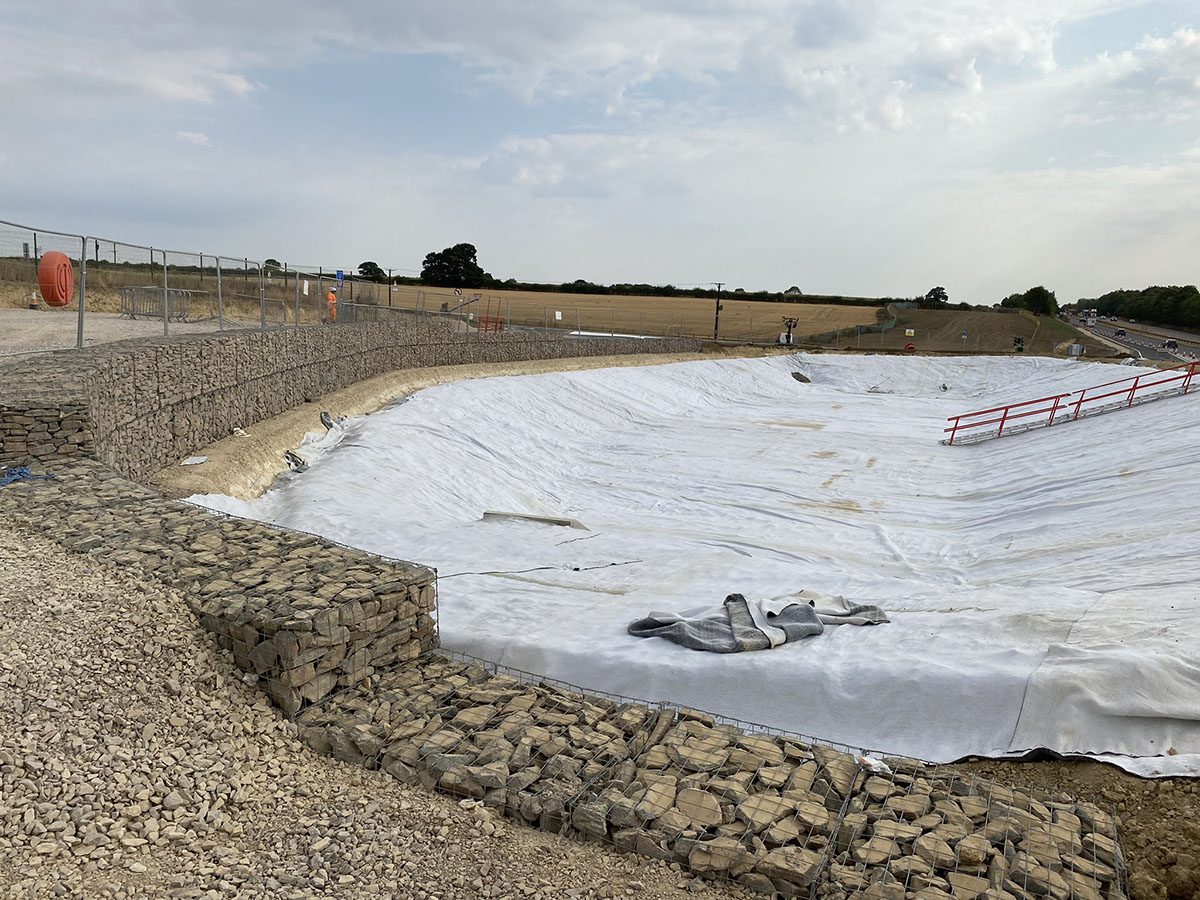
Engineering Performance Overview
The performance of this barrier system depends on several key factors, including hydration, confinement stress, and chemical compatibility. When fully hydrated, sodium bentonite expands significantly. It forms a dense gel layer that blocks fluid migration effectively.
Key technical characteristics include:
- Very low hydraulic conductivity (typically 10⁻¹¹ to 10⁻⁹ m/s)
- Self-sealing capability under minor punctures
- High adaptability to uneven subgrade surfaces
- Reduced installation thickness compared to compacted clay (often <10 mm)
In addition, field studies from EPA and ASTM evaluations confirm that geosynthetic-based containment systems improve construction efficiency. At the same time, they maintain long-term hydraulic stability in demanding environments.
For engineers, selecting high-performance geosynthetic clay liner systems for civil engineering projects ensures consistent barrier performance across variable soil and climatic conditions.
Installation Considerations
Proper installation is essential to achieve reliable performance. First, the subgrade must be smooth and well-compacted. This helps prevent stress concentration and damage.
Best practices include:
- Smooth and compact subgrade preparation
- Proper panel overlap to prevent leakage paths
- Avoiding premature hydration before cover placement
- Immediate covering with soil or geomembrane after installation
When correctly installed, geosynthetic clay systems provide reliable containment performance for decades, making them a core component in modern geotechnical engineering infrastructure.


Comments
Post a Comment