Geocell Driveway Case Study: Improving Stability with Geosynthetics
Geocell driveway solutions are increasingly used in residential, agricultural, and industrial road projects to improve ground stability and reduce maintenance costs. By combining geocell confinement technology with geotextiles and aggregate materials, contractors can create stronger driveways that resist rutting, erosion, and surface deformation caused by vehicle loads and weather conditions.
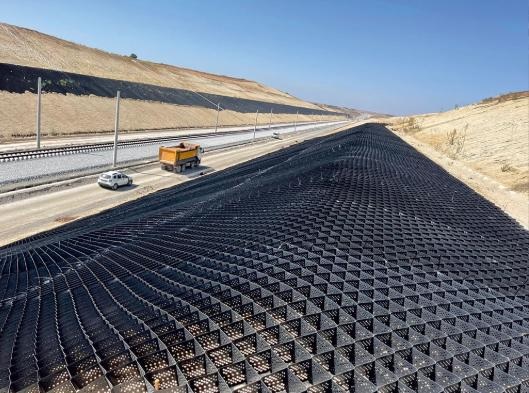
Geocell Driveway Applications in Ground Stabilization Projects
Traditional gravel driveways often experience problems such as material displacement, uneven settlement, and poor performance on weak soils. Heavy vehicles repeatedly apply pressure to the surface, causing aggregate migration and deep wheel tracks. These issues are especially common in areas with clay soils, high rainfall, or unstable subgrades.
A geosynthetic reinforcement system provides a practical solution by improving the mechanical performance of the driveway structure. The three-dimensional honeycomb structure confines aggregate particles and distributes loads more effectively across the foundation layer.
Using a geocell driveway reinforcement system helps engineers reduce aggregate movement while improving the overall bearing capacity of the road surface. When combined with a geotextile separator, the system also prevents soil contamination and maintains long-term drainage performance.
Geocell Driveway Case Study: Residential Access Road Improvement
A residential access road project in the United States faced continuous maintenance problems due to soft subgrade conditions. The original gravel driveway became heavily rutted after frequent vehicle traffic and seasonal rainfall. Regular grading and additional gravel placement increased operating costs without solving the underlying soil instability.
The construction team installed a geotextile layer followed by cellular confinement panels filled with crushed stone. The reinforced structure created a stable load-bearing surface while allowing water to pass through naturally.
After completion, the driveway showed improved resistance against vehicle pressure, reduced surface deformation, and fewer maintenance requirements. The project demonstrated how geocell driveway solutions for residential roads can provide a durable alternative to traditional gravel-only construction.
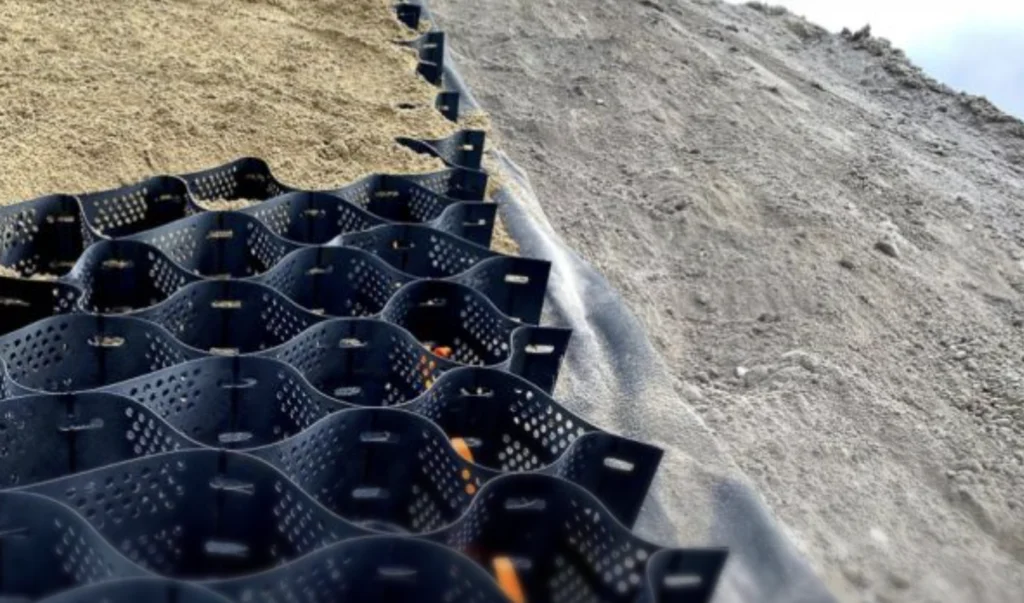
Rural Farm Road Reinforcement Case Study
A farming operation in the United Kingdom required an access road capable of supporting tractors, delivery vehicles, and seasonal equipment. The existing road surface frequently failed during wet periods because the underlying soil could not support repeated heavy loads.
Engineers selected a geosynthetic reinforcement approach using geocell panels and locally available aggregate. The cellular confinement structure stabilized the stone layer and improved load distribution without requiring a thick pavement section.
The completed road provided reliable access throughout different weather conditions. This project highlighted the value of geocell driveway systems for heavy-duty access routes, especially where reducing construction materials and maintenance expenses are important.
Engineering Benefits of Geosynthetic Driveway Construction
Geosynthetic technology offers several advantages for driveway applications:
- Improved load distribution by spreading vehicle pressure across a wider area
- Enhanced soil stabilization on weak or variable ground conditions
- Better drainage performance compared with compacted soil surfaces
- Reduced aggregate loss and lower long-term maintenance requirements
For contractors and project owners searching for geosynthetic solutions for driveway reinforcement, cellular confinement technology provides a reliable method for improving road performance while maintaining environmentally friendly construction practices.
Real-world engineering projects demonstrate that geosynthetic reinforcement can significantly improve driveway durability and performance. From residential entrances to agricultural access roads, geocell systems provide structural support, drainage control, and long-term stability.
With increasing demand for sustainable infrastructure solutions, geocell driveway technology continues to become an effective choice for projects requiring strong performance with reduced maintenance.


Comments
Post a Comment