Stabilizing Slopes with Geocells: An Innovative Approach to Erosion Control
In the continuous battle against soil erosion and landscape degradation, innovative solutions are always in demand. Among these, geocell technology has emerged as a frontline defense, particularly in slope protection. This popular science article delves into the world of geocell technology, exploring its definition, applications, capabilities, and the different types available in the market. Through a series of questions and answers, we aim to shed light on how geocells contribute to environmental sustainability and infrastructure resilience.
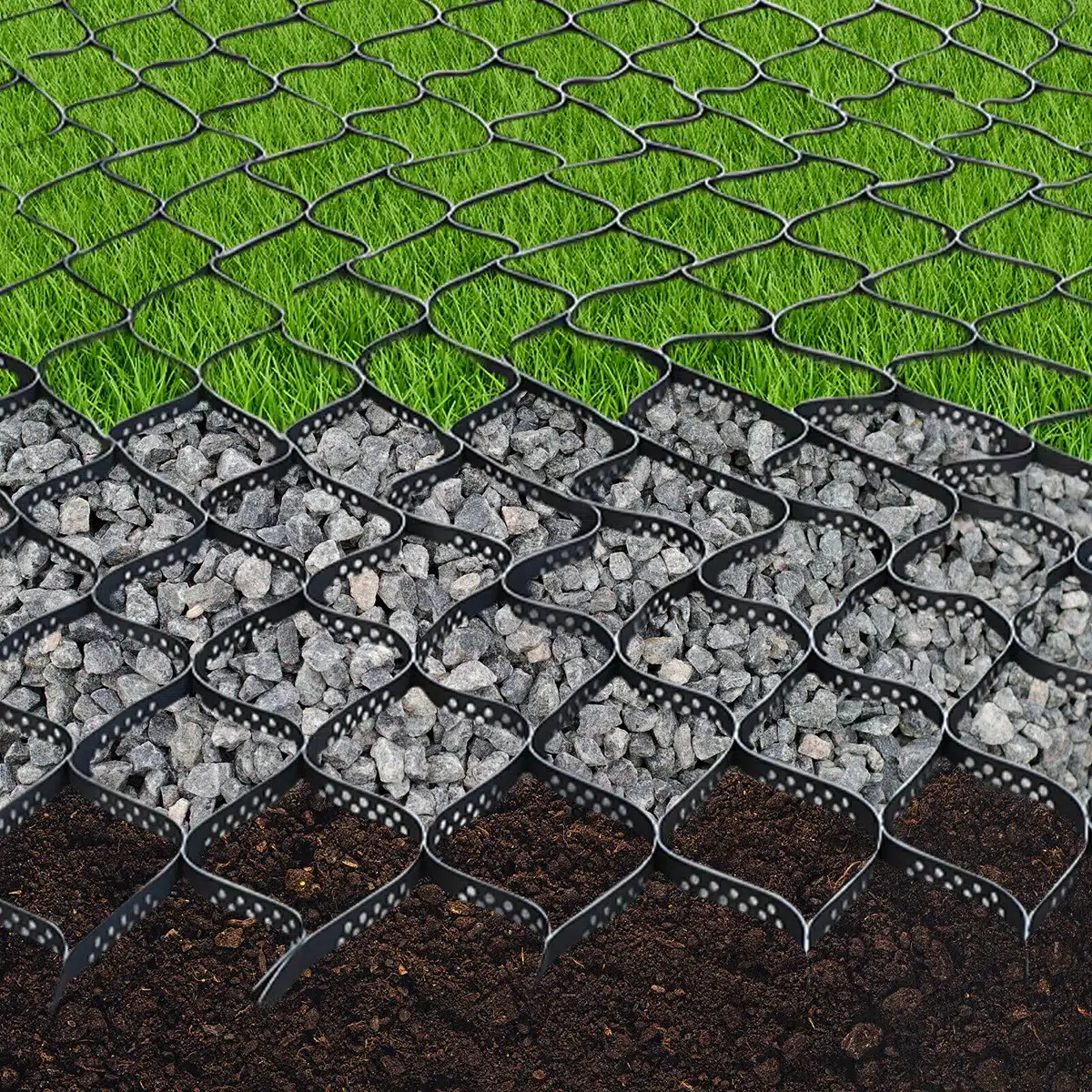
What is Slope Protection with Geocells?
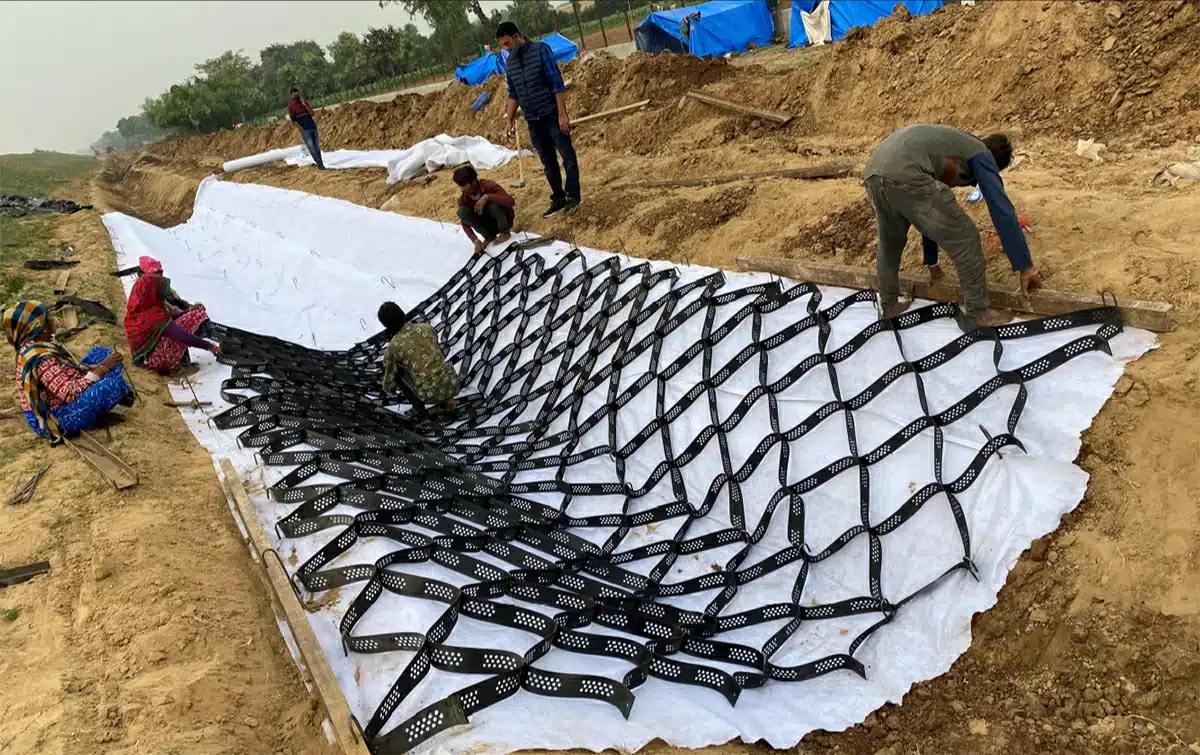
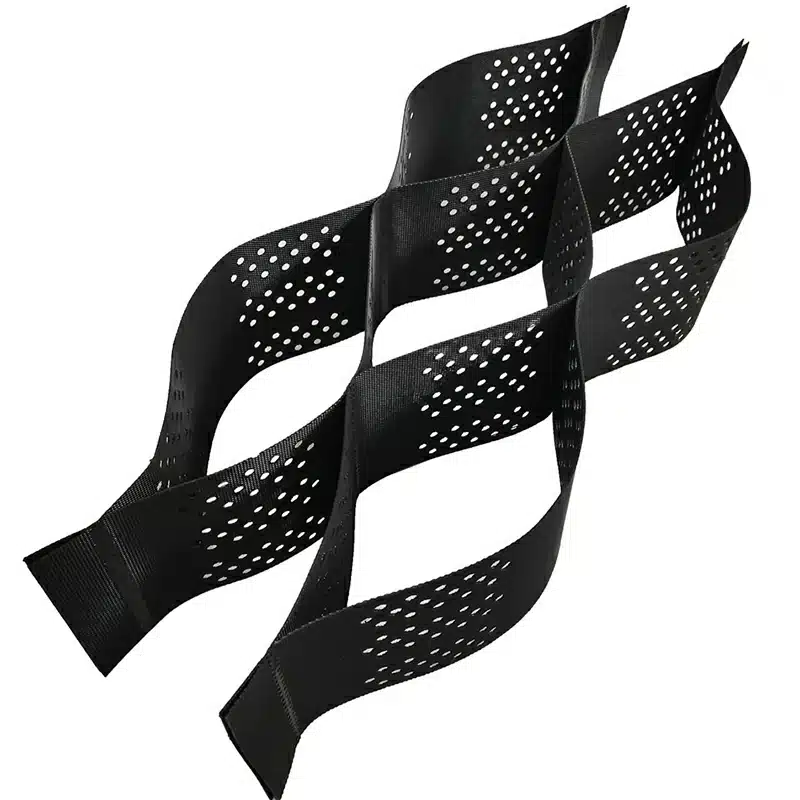
Slope protection with geocells involves the strategic use of a three-dimensional, honeycomb-like structure made from high-density polyethylene (HDPE) or other polymeric alloys. These innovative cells are expanded on-site to create a flexible and permeable matrix, which can be adeptly filled with soil, sand, gravel, or concrete. Geocells are employed to protect slopes from erosion and assist in stabilizing the surface. They serve the dual purpose of preventing soil erosion and enhancing vegetative growth, thus stabilizing the terrain against the erosive forces of water and wind. Through the effective confinement of the fill material, geocells significantly increase the shear strength of the soil, effectively reducing the risk of landslides and erosion.
What is the Maximum Slope for Geocell?
The maximum slope that can be effectively stabilized using geocell technology varies depending on the specific geocell product, the type of soil, and the environmental conditions of the site. Remarkably, geocells have been successfully implemented on slopes with gradients up to 1:1, equivalent to 45 degrees, and even steeper in some cases. The key to maximizing the effectiveness of geocells on steep slopes, such as those at 45 degrees, is proper installation, appropriate anchoring, and selection of suitable fill material. For extreme slopes, specialized geocell designs with more robust structural features may be necessary to ensure stability and prevent erosion.
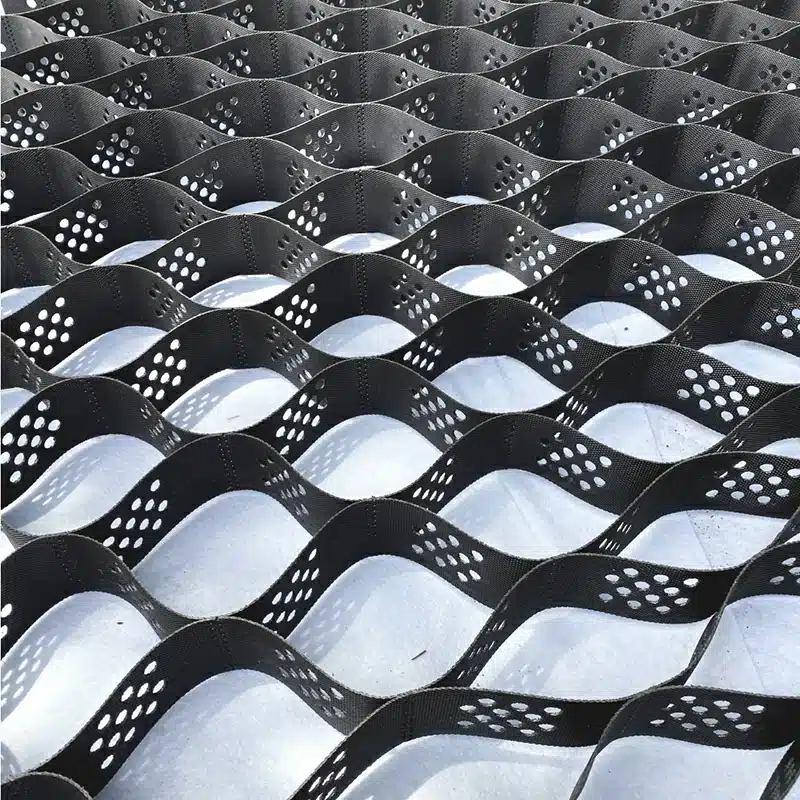
What are the Different Types of Geocells?
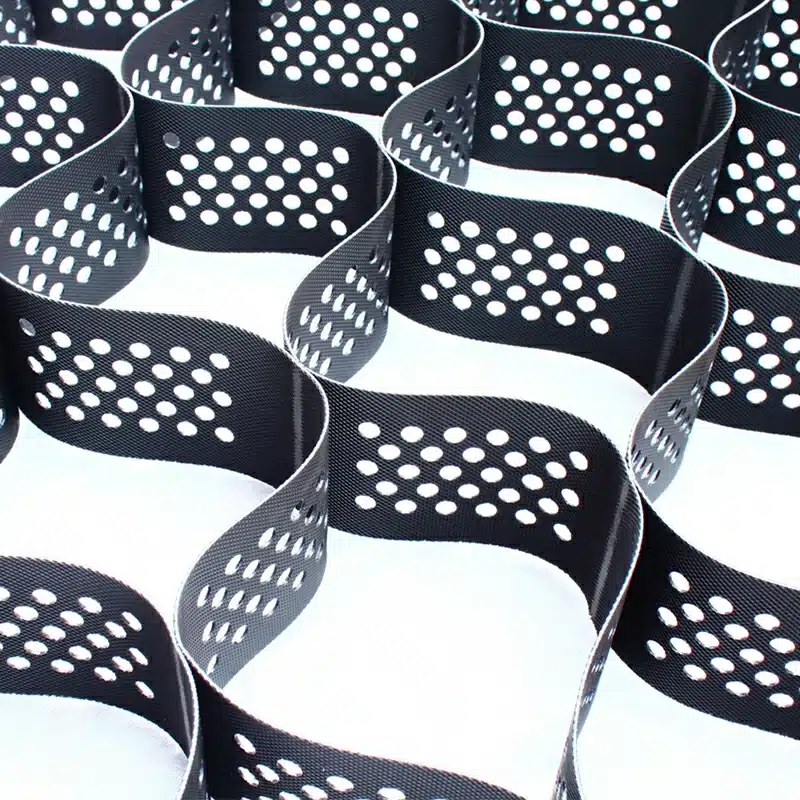
Geocells come in various types, primarily distinguished by their material, cell size, depth, and whether they are non-perforated or perforated. The most common material is high-density polyethylene (HDPE), known for its durability and environmental resistance. Other materials include polyester and novel biodegradable options for temporary applications. Cell sizes can range from small for pedestrian loads to large for heavy vehicular loads. The depth of the geocell also varies, with deeper cells providing greater stability for more challenging applications. Among the variations, non-perforated geocell and perforated geocell options stand out; the latter features perforations to facilitate water drainage and promote vegetation growth within the cells, while the former offers a solid structure for specific environmental conditions.
Where is Geocell Used?
土工格室技术除了护坡之外还有广泛的应用,包括侵蚀控制施工、平地和陡坡上的土壤稳定、通道保护以及用于负载支撑和土保持的结构加固。它有助于道路建设稳定基层和底基层,有效减少对传统骨料的需求。在景观美化中,土工格室有助于创建绿色挡土墙和路堤,展示其在平坦地面和陡坡上稳定土壤的效用。此外,它们的应用还扩展到防止水道侵蚀的通道保护以及为石油和天然气等行业以及军事行动中的重型设备建造坚固的负载支撑平台,这证明了它们在负载支撑和军事行动的结构加固方面的有效性。土保持力。土工格室的多功能性使其成为众多土木工程和环境保护项目的热门选择。
土工格室技术为边坡保护和土壤稳定提供了有效且环保的解决方案。通过了解土工格室的基本方面,包括其应用、局限性和类型,利益相关者可以就土工格室在对抗侵蚀和增强基础设施复原力方面的用途做出明智的决策。随着技术的发展,土工格室在新应用中的潜力无疑将扩大,进一步巩固其在可持续建筑和环境保护中的作用。


Comments
Post a Comment