HDPE Geocell: Transforming Construction with Stabilization Solutions
HDPE Geocell, a revolutionary material in civil engineering, has gained significant traction for its versatility and functionality in various construction projects. This article delves into the essence of HDPE Geocell, its applications, and requirements, and explores its pivotal role in modern infrastructure development.
What is HDPE Geocell Material?
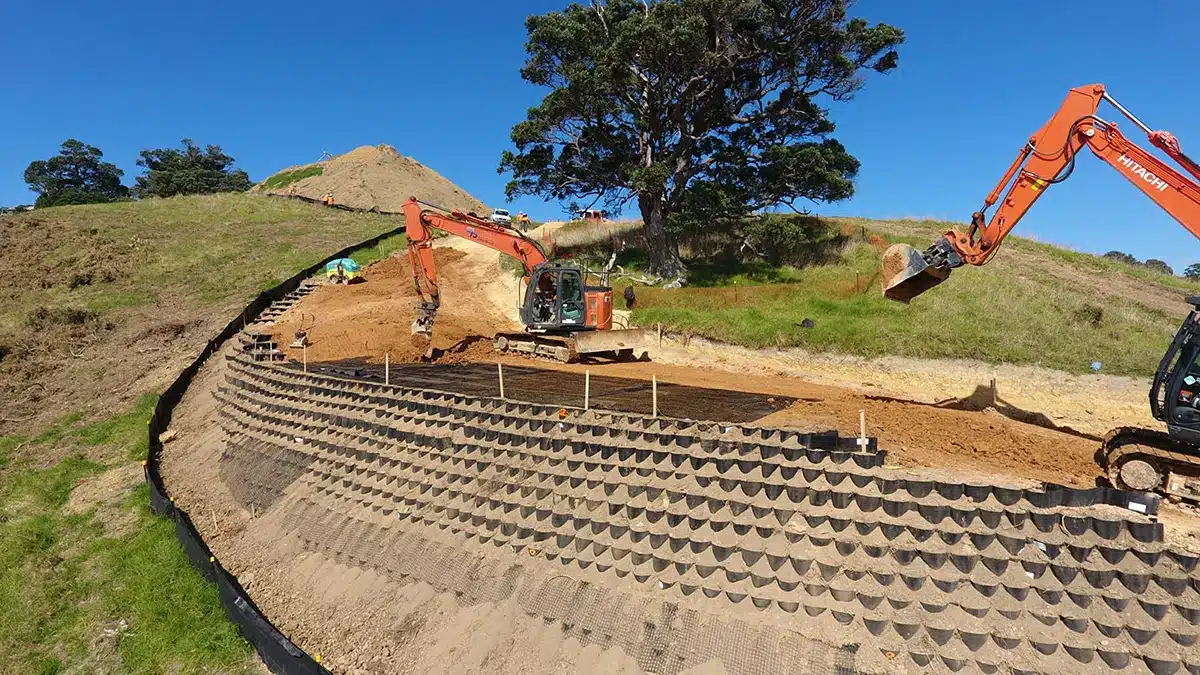
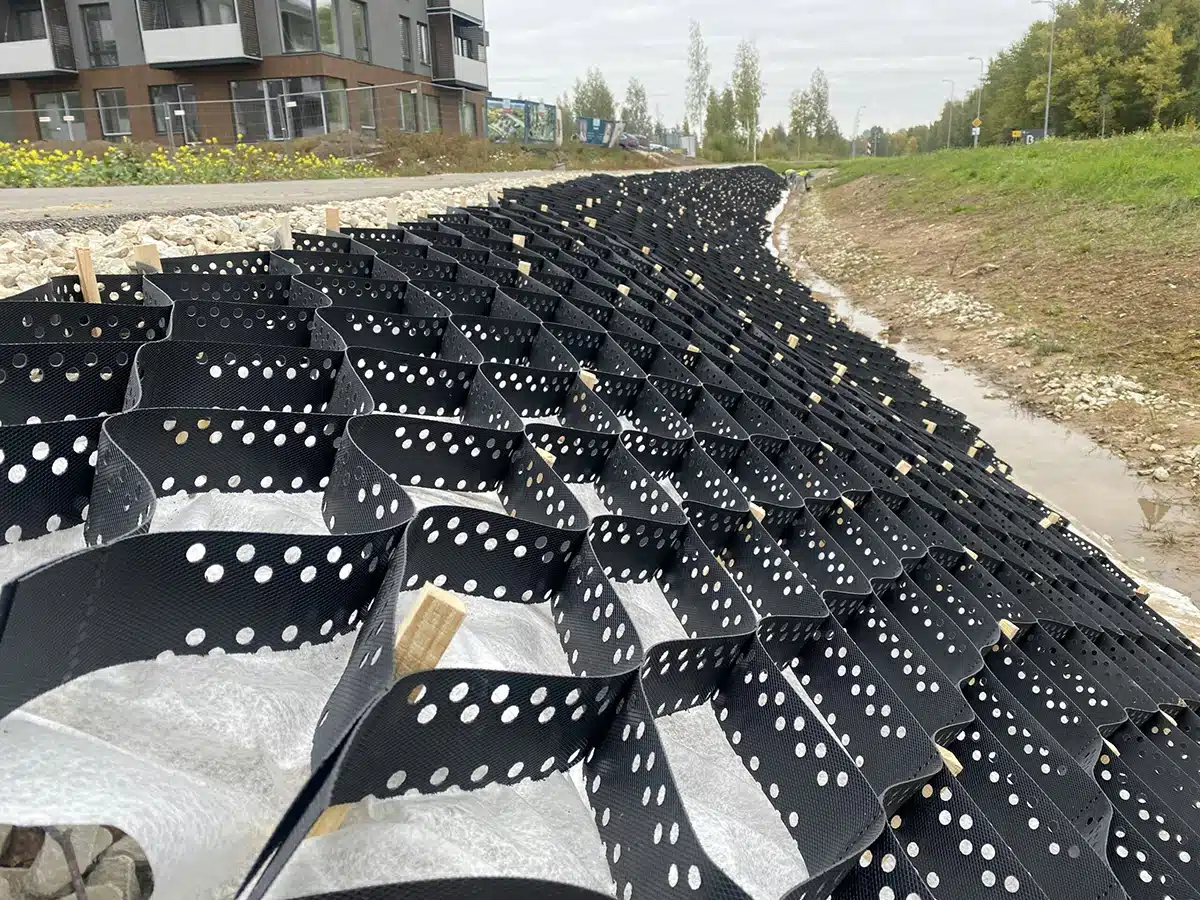
HDPE Geocell is a sturdy three-dimensional structure made from high-density polyethylene (HDPE). Its interconnected cells form a grid-like pattern, reinforcing and stabilizing soils in construction. HDPE, prized for its exceptional durability and resistance to chemicals and environmental wear, serves as the primary material for these geocells.
What is the Use of HDPE Geocell?
HDPE Geocell offers versatile solutions for civil engineering and construction needs, working to reduce the risk of structural failures by enhancing soil stabilization, load transfer, and erosion control:
- Soil Stabilization: Confines infill materials, preventing erosion and reinforcing weak ground for stable construction foundations.
- Erosion Control: Shields against water-induced soil displacement, safeguarding slopes, embankments, and riverbanks from erosion.
- Road Construction: Distributes loads, reducing stresses on road surfaces and extending pavement lifespan.
- Retaining Walls: Reinforces stability against soil pressure, maintaining wall integrity over time.
- Slope Reinforcement: Prevents slope failures by stabilizing soil within cells, particularly in erosion-prone areas.
- Channel Protection: Fortifies riverbanks, shorelines, and channels, preventing scouring and preserving water body integrity against erosion.
What distinguishes HDPE Geocell from other soil stabilization methods or materials?
High-density polyethylene (HDPE) geocells are a unique form of soil stabilization that stands out for several reasons:
- Structure: Geocells are three-dimensional cellular structures made from interconnected panels or cells that confine and stabilize soil. HDPE geocells have a strong, rigid structure that can withstand heavy loads and distribute weight more evenly compared to traditional stabilization methods like gravel, sand, or geotextiles.
- Versatility: They can be used in various applications such as erosion control, slope protection, retaining walls, and load support for roads and railways. Their versatility allows engineers to use them in different soil conditions and terrains.
- Increased Load-Bearing Capacity: Geocells improve load-bearing capacity by spreading the load over a larger area. When filled with materials like soil, aggregate, or concrete, they create a stable foundation that can support heavy loads.
- Erosion Control: Geocells help prevent soil erosion by confining soil particles within the cells. This prevents them from being washed away by water runoff or wind.
- Ease of Installation: They are relatively easy to install and require minimal specialized equipment. This can reduce construction time and costs compared to other conventional stabilization methods.
- Environmental Benefits: HDPE geocells are often made from recycled materials, making them environmentally friendly. Additionally, their use can reduce the need for excavation and disposal of soil, minimizing environmental impact.
How Does HDPE Geocell Benefit Construction Projects?
The utilization of HDPE Geocell brings numerous advantages to construction endeavors. It enhances load-bearing capacity, reduces construction time, minimizes environmental impact by promoting sustainable practices, and offers cost-effectiveness. Moreover, its flexible nature allows for easy installation and adaptability to various terrains, contributing to the longevity of structures.
In conclusion, HDPE Geocell stands as a transformative material in the realm of civil engineering, offering innovative solutions for soil stabilization, erosion control, and structural reinforcement. Its durability, and versatility benefits position it as a crucial component in modern construction practices.





Comments
Post a Comment