Understanding the Transmissivity of Geocomposite: Properties, Differences, and Functionality
Geocomposites are essential in civil engineering and the environment due to their special features. In this article, we’ll discuss how geocomposites’ transmissivity changes as vertical stress on the sample increases. This happens because the geocomposite core becomes thinner, and the filter enters the core. We’ll also cover their properties, distinctions from geotextiles, and their role in improving infrastructure and environmental solutions.
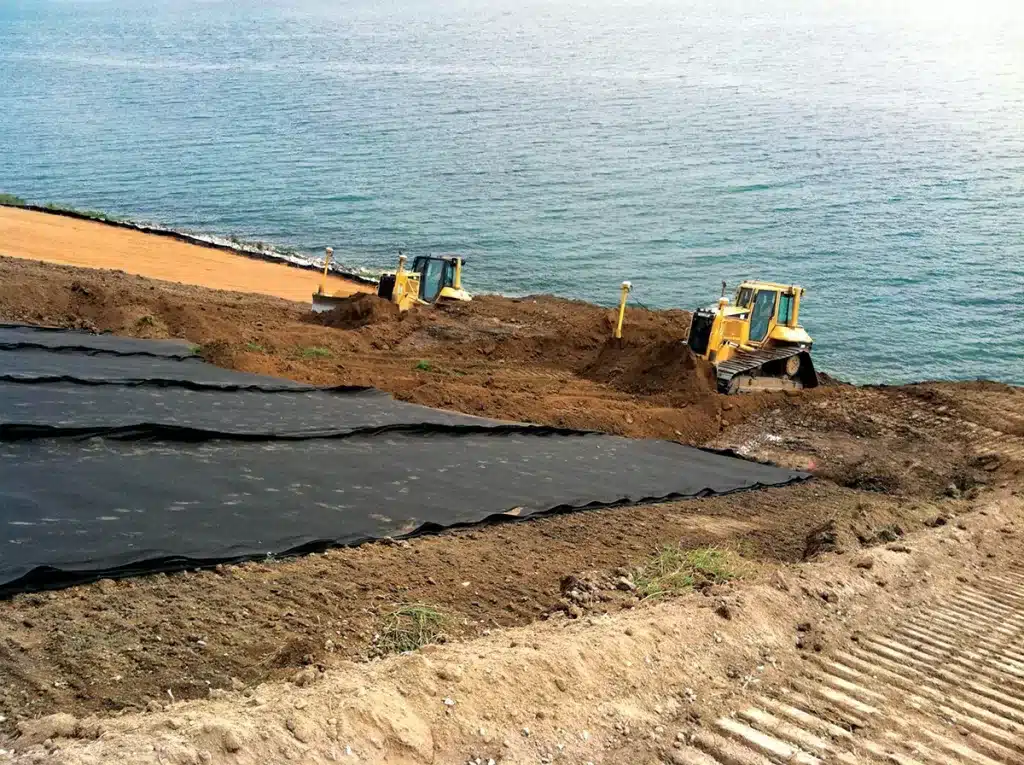
What is the Transmissivity of Geocomposite?
In geocomposites, transmissivity describes how well they allow fluids to flow within the material’s plane. This property is usually measured in flow rate per unit area, such as liters per square meter per second. Geocomposites are purposefully designed to possess particular transmissivity values, making them ideal for applications like drainage, filtration, and erosion control.
What are the Properties of Geocomposite?
Geocomposites have several versatile properties essential for civil engineering and environmental projects:
- Transmissivity: As previously mentioned, transmissivity is a crucial property of geocomposites that can be customized to suit specific project needs.
- Strength and Durability: Geocomposites are intentionally crafted to offer impressive tensile strength and durability, ensuring their long-term performance.
- Filtration: They excel at separating solid particles from fluids while allowing water or gases to pass through smoothly.
- Separation: Geocomposites serve as a protective barrier between different soil layers or materials, preventing mixing and preserving the structural integrity of engineered constructions.
Moreover, geocomposites are valuable for their vertical and horizontal permeable capacity, enhancing their usefulness in various applications.
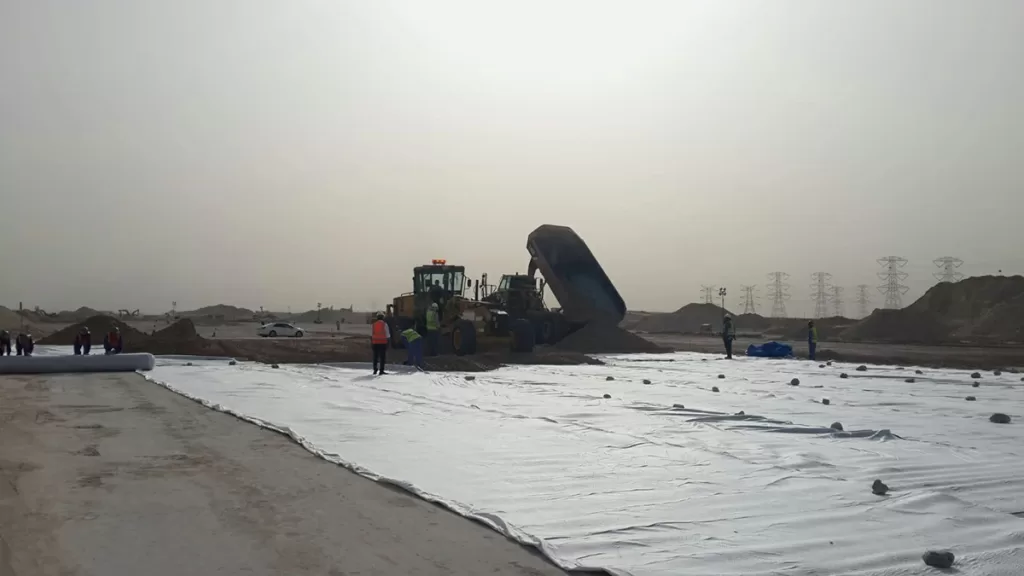
What is the Difference between Geotextile and Geocomposite?
Geotextiles and geocomposites, although both geosynthetic materials have distinct purposes:
- Geotextile: Geotextiles are single-layer synthetic fabric materials that serve functions like filtration, separation, and reinforcement. They lack the multiple layers found in geocomposites and have lower transmissivity compared to geocomposites.
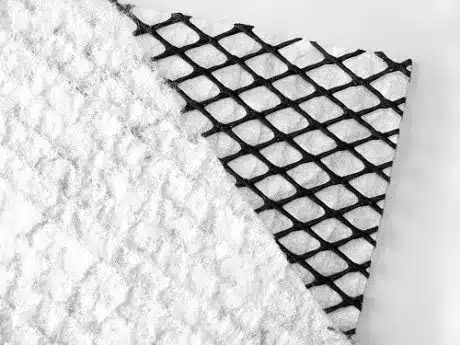
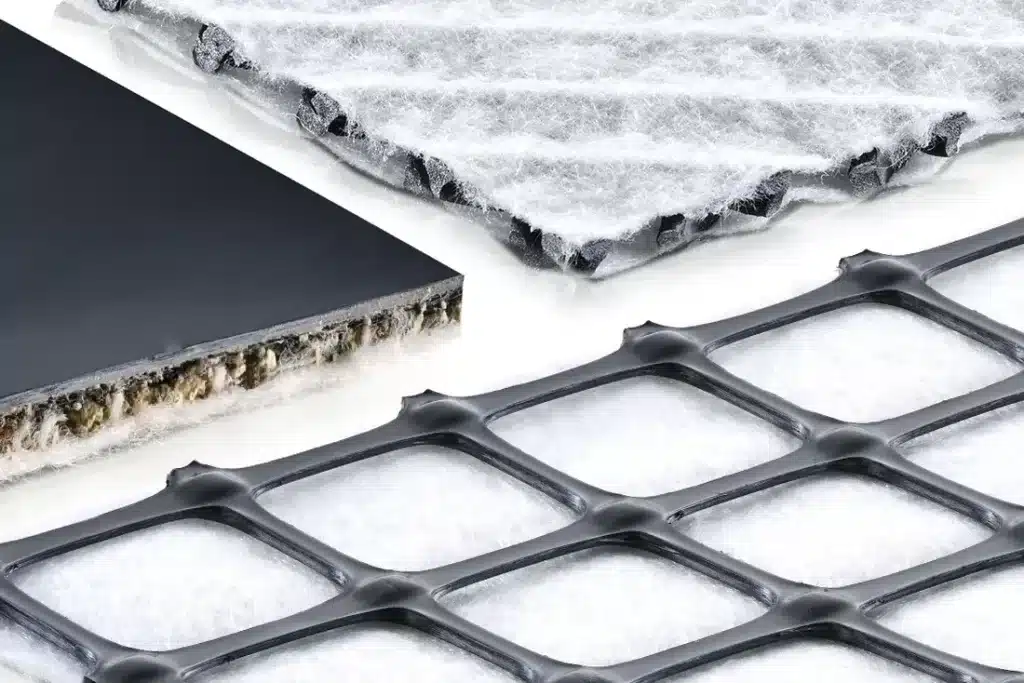
- Geocomposite: Geocomposites, as their name implies, are composite materials made by combining one or more geosynthetics, including geogrids, geotextiles, geomembranes, and geonets, with another material. They offer a broader range of functions, such as drainage, filtration, reinforcement, and protection. Geocomposites have a multi-layered structure, which can result in higher transmissivity.
How Does Geocomposite Work?
Geocomposites have diverse functions depending on their design and use. Here are a few examples of how they operate:
- Drainage: Geocomposites, especially those with high transmissivity, are frequently employed in drainage systems. They permit liquid to pass through the geotextiles into the geonet and onward to a collection point, all while preventing soil particles from clogging the system.
- Filtration: In environmental protection projects, geocomposites play a pivotal role by filtering pollutants from stormwater runoff.
- Erosion Control: Geocomposites contribute to erosion control applications by stabilizing slopes. They reinforce the soil and create a protective barrier against erosion, helping to preserve the integrity of the landscape.
In conclusion, the transmissivity of geocomposites is a crucial factor that determines their suitability for various engineering and environmental applications. Understanding their properties, differences from geotextiles, and how they function is essential for selecting the right material for specific projects, ensuring their success and longevity.


Comments
Post a Comment